CEIBS 25th Anniversary Celebration Gala Highlights
Re-live some of the highlights from this year’s CEIBS 25th Anniversary Celebration Gala at our Shanghai campus.

Dear Friends of CEIBS,
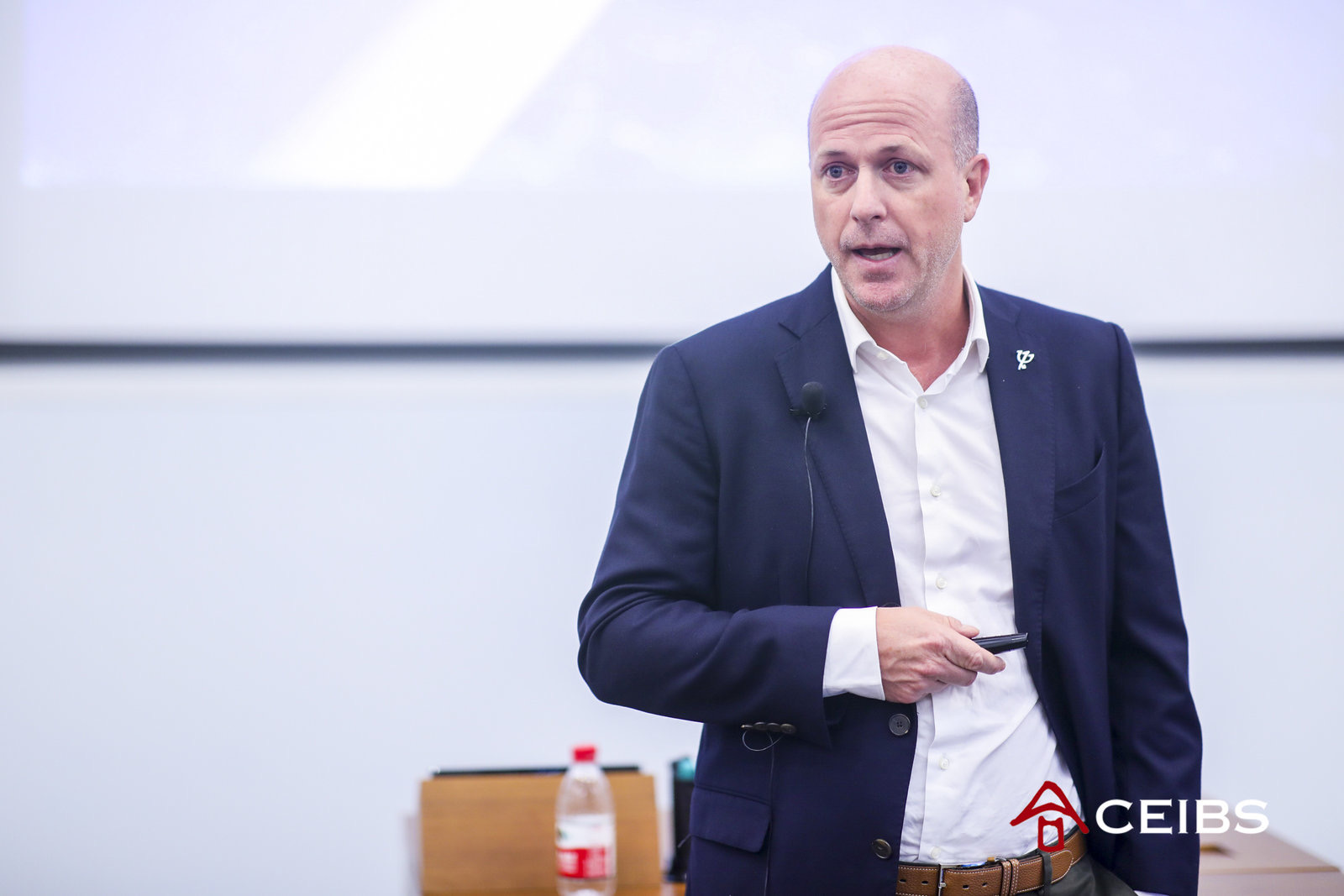
We cordially invite you to attend our CEIBS Executive Forum on December 3, 2019 with Mr. White Wang, President, China General Manager of Allergan, who will give a lecture entitled Talent and Organizational Innovation in the Consumer Healthcare Sector.
Today, domestic consumption in China is upgrading to a higher level as a result of various factors, including a booming economy, steadily rising per-capita GDP, expanding middle class, increased demand for products and services, and a seamless digital experience enabled by O2O commerce. It is in this context that the consumer healthcare sector has grown exponentially. With more diverse channels by which to access information and greater product transparency, pharmaceutical and medical device companies are required to meet the needs of increasingly demanding consumers. In this lecture, Mr. Wang will share his insights on how the consumer healthcare sector will evolve in the mobile internet era and how consumer healthcare companies will cope with challenges regarding organizational innovation and talent integration.
This lecture will cover:
About the speaker
Mr. White Wang has a more than 18 years of management, sales and marketing experience in the Chinese healthcare industry, as well as rich experience in specialty/primary care pharmaceuticals and medical devices in both traditional therapy and consumer marketing. He has managed healthcare products in a variety of fields, including oncology, cardiology, neuroscience, ophthalmology, respiratory medicine, immunology, and medical aesthetics. He has excelled in driving business growth, has a solid network of healthcare KOLs, is experienced in transformational leadership and business model innovation for B2B and B2B2C, and has strong communication skills.
We look forward to seeing you at this much anticipated event.
Date: December 3, 2019
Venue: CEIBS Shanghai Campus, 699 Hongfeng Road, Pudong
Language: Chinese
Agenda:
18:30-18:35 Opening and introduction
18:35-19:30 Speech by Mr. White Wang, President, China General Manager of Allergan
19:30-20:00 Q&A
RSVP before December 3 to Ms. Tracy Kong at execforum@ceibs.edu or telephone +86-21-2890-5415.
We cordially invite you to attend our CEIBS Executive Forum on December 3, 2019 with Mr. White Wang, President, China General Manager of Allergan, who will give a lecture entitled Talent and Organizational Innovation in the Consumer Healthcare Sector.
November 26, 2019. Shanghai – CEIBS students, alumni and other guests gathered at our Shanghai campus this evening for the latest edition of the CEIBS Executive Forum 2019 series and to welcome Club Med APAC Markets CEO Mr. Xavier Desaulles for a talk on the Evolution of Family Travelling in China and the Impact of Digitalization of Travel.
During the event, Mr. Desaulles offered a refreshing take on the concept of all-inclusive family vacations in a world where so much emphasis is placed on individual travel, unique experiences and customisation.
“Our business is based on scale and you’ve got have a big number of guests to make the model work,” he told the audience. “But, that has always been the model to make it work and to make it profitable. A small Club Med doesn’t work. A hundred to a hundred-and-fifty rooms won’t work. We will never be a boutique hotel. That isn’t who we are.”
With resorts at nearly 70 destinations around the world, Mr. Desaulles further explained that being more than a hotel company takes a wide range of talent to make the premium all-inclusive formula work.
“Doing all-inclusive is quite difficult. There are a lot of barriers to entry to deliver a full on experience. You need to be good at hospitality, at creating experiences and at creating shows,” he said. “You need to be good at a number of experience markers, which we believe is a great barrier to entry. Our competitors are very good at delivering incredible service on the room or the food, but they are not equally good at this all-inclusive concept.”
Since entering the Chinese mainland in 2003, Club Med has experienced the speed of change in the country’s tourism market first-hand. Presented with the prospects of roughly 140 million Chinese travellers per year, Mr. Desaulles said that the company is increasingly looking to China as the market of the future.
“It’s fair to say that the hospitality business model is about footprint. [Some of our competitors] have one hundred or two hundred properties in China and this is how they make themselves known,” he stated. “We only have seven [resorts], so we know that we have to do two things. First, extend our reach and our footprint here in China to make the brand known. We also need to get closer to the source markets – tier one cities, in particular.”
One way the company is getting closer to its customers is by experimenting with the concept of drive-to destinations, such as its Club Med Joyview resort, located in Anji in Zhejiang Province, a few hours by car from Shanghai.
Nevertheless, getting close to your customers isn’t in itself enough to succeed. As Chinese travellers become more sophisticated and demanding, Mr. Desaulles noted, the company has had to work hard to demonstrate the value of the experience on offer at their resorts.
“It’s one of the biggest challenges we have to face, explaining in a rational way the [all-inclusive concept]. When you say a room, it’s very simple, you know what you’re buying,” he said. “That’s about sixty percent of the price, so it’s the other forty percent you need to explain. Theoretically, it’s the three meals, the shows – it takes money. Some of the shows we do every night, and a number of other hospitality providers would charge for it.”
While emphasising that Club Med welcomes everyone to their resorts, Mr. Desaulles added that businesses should not shy away from standing for who they are, especially when it comes to appealing to their core segments.
“When you’re a challenger abroad you need to pick your battles. We have limited means in terms of marketing, so we need to be focused by tapping into the most bankable segments – families, upper-income families, and families that have a double incomes,” he said. “This is our target market and the one which is the most resilient in [what is otherwise] a very volatile industry – one with high costs, high volatility and small margins.”
With a strong focus on families and tier one cities, Mr. Desaulles said that the company’s aim is to make Club Med the best choice for families for a holiday. In conclusion, he also offered some deeper insight into the importance of this mission.
“At the end of the day we lead such busy lives that what is important is that during this short span of the year [we have together] we can reconnect as a family,” he said. “More than fifty percent of the memories that are created during your family time are created during vacations. So imagine the importance of your vacation in your family legacy and your family time.”
For more on upcoming CEIBS Executives Forums and other events, please visit our events page here.
CEIBS students, alumni and other guests gathered at our Shanghai campus this evening for the latest edition of the CEIBS Executive Forum 2019 series and to welcome Club Med APAC Markets CEO Mr. Xavier Desaulles for a talk on the Evolution of Family Travelling in China and the Impact of Digitalization of Travel.
I love CEIBS GEMBA! Watch the video highlights from this year's CEIBS GEMBA 2019 Opening Residency Module at our Shanghai campus.
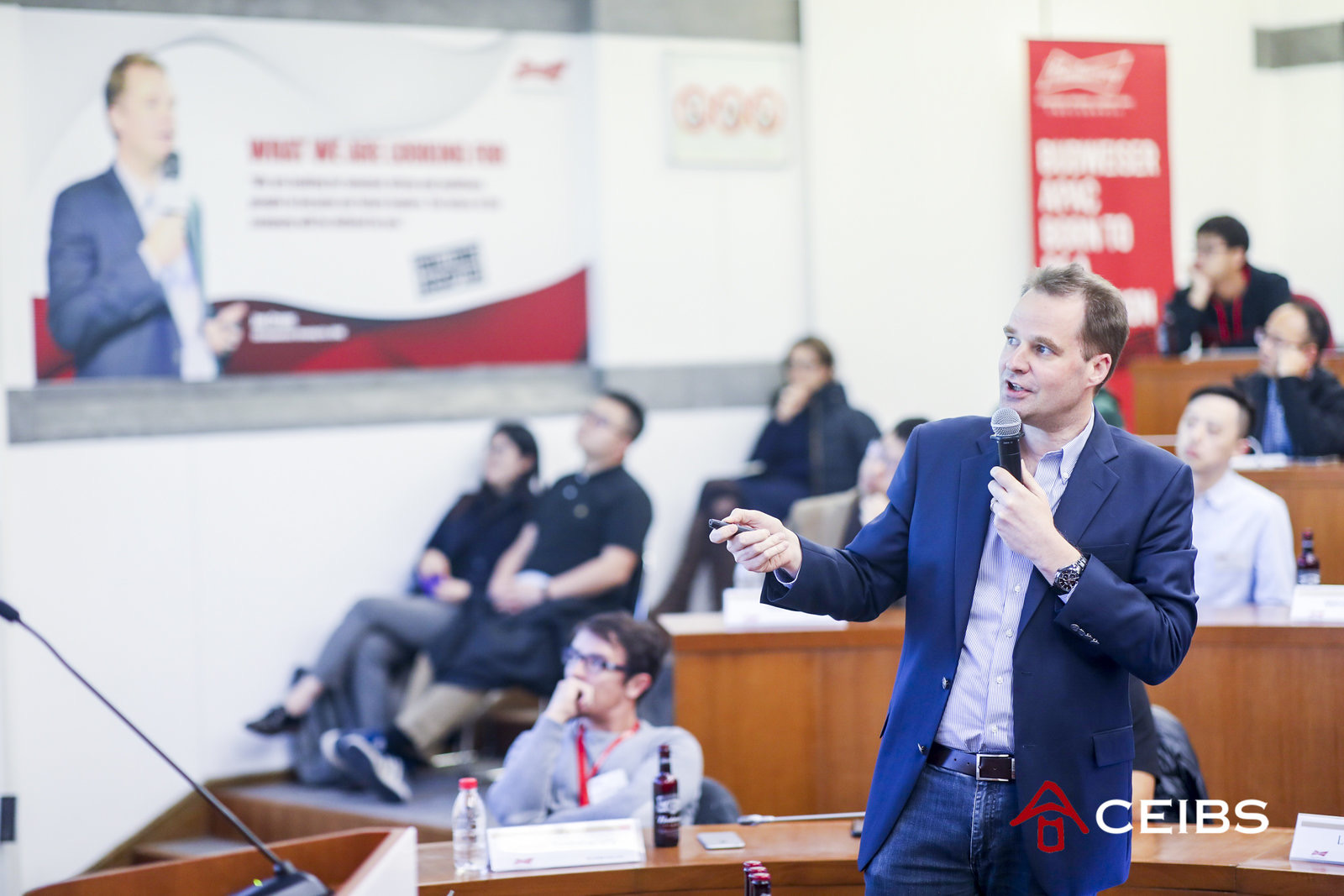
November 18, 2019 – CEIBS’ Shanghai campus played host to nearly 150 guests this evening for a special CEIBS Executive Forum talk by Jan Craps, CEO and Executive Director Budweiser APAC & President APAC Zone AB InBev at Anheuser-Busch InBev, on the theme of Business through Digitalisation. Mr. Craps’ presentation examined four pillars related to digitization – consumers, customers, supply chain, and operations – and how, as one of the world’s largest consumer packaged goods (CPG) companies, AB InBev is leveraging new technologies to better drive business growth in China and Asia.
One of the first steps towards capitalising on digitisation, he explained, involves engaging with different ecosystems – such as those created by platforms such as Alibaba, Tencent and Meituan – which can provide valuable third-party data about consumers, their likes, dislikes and other behaviours.
“Consumers are exposed to all these different influences and it’s quite amazing how they’re connected. They’re spending more and more time on their screens, but it is also making their lives a lot more convenient than in the past,” Mr. Craps told the audience. “Also, it allows us to target consumer audiences in a much more granular way than we could in the past.”
Building a consumer data hub starts with traffic, and another way AB InBev is driving more traffic directly to itself is through the launch of a new app called BudSpace. In just five months since its launch in China, BudSpace has acquired 3.5 million users – or about 17,000 new users each day.
In addition to marketing beer, Mr. Craps continued, the app gives users access to different functionalities, including cross-over merchandise sales and event promotions. More importantly, it also gives AB InBev access to the insights it needs in order to engage with consumers in more meaningful ways.
“If you’re real football lover, we don’t want to target you with food propositions. And if you really like music, we can offer you tickets for EDM festivals,” he said. “But, of course, we need conversion and other insights which again help us segment and target messages and make us more relevant for consumers.”
At the same time, Mr. Craps explained during the forum, the company works with various partners to collect customer data about the markets they operate in. One example of this is a company AB InBev works with which supplies checkout systems to about 80,000 restaurants across China, providing it with roughly two million sets of data each week.
“It’s not consumer data, but it is customer data, restaurant level data, and we can see on a daily basis what is getting sold – which beers, which liquors, which dishes, what time of the day, what gets bought together, how much people buy,” he said. “If we do a certain promotion, for example, we can see how it drives certain sales.”
Moreover, Mr. Craps explained, once this this information is collected, the company employs a team of analysts to look at the data and come up with relevant and actionable insights for its business.
“We can then cascade those to our salesforce, for example, so they visit the right restaurants, and it brings the intelligence of data into the salesforce,” he said. “You can imagine how powerful this is already today and how it will continue to build its power into the future.”
With more than 50 breweries and 60 distribution centres outputting roughly 15 billion litres of beer in Asia each year, Mr. Craps added that AB InBev is also looking to digitisation to improve the way in which it produces, warehouses and ships its products.
“Our breweries already have a lot of technology – any big can line, packaging line or brewery tanks, they’re already very digitised and automated to a certain extent, but they’re not really connected,” he said. “You can programme a can line, but if you want it to talk to the brewing kettle or talk to the forklift in the warehouse, that doesn’t exist today.”
But, things are changing. Where today it requires about forty to fifty screens to run a brewery, Mr. Craps stated, tomorrow it will be possible to do this from a single tablet device and AB InBev is already working towards building what the company calls ‘connected breweries’.
“You can build management systems that don’t just find problems after they happen, but also apply basic AI machine learning techniques to predict problems before they happen,” he said. “You can send operators or technicians to the line before the problems happen based on past patterns.”
As the head of AB InBev’s APAC Zone, Mr. Craps also leads a division which employs more than 30,000 people in China, East Asia, South Asia and Southeast Asia. With this in mind, he stressed that technology plays an important role in how the company recruits and retains new job candidates.
“Today, we can interview thousands of people just by comparing short questionnaires that they take on their computers or phones,” he said. “Using machine learning, we can differentiate, with a very good learning pattern, for the recruitment process to support the candidates before they come into our company for an interview.”
Ultimately, while it is only one piece of the puzzle, Mr. Craps pointed out that digitisation has had a profound impact on how change gets ingrained in various processes and how people at AB InBev work together to solve problems. At the same time, he said, technology is reshaping the company by helping them build more of their capabilities in house.
“For example, ten years ago, we outsourced a lot of our creative work and anything that was digital we ended up using agencies, but today we in-source most of that,” Mr. Craps stated. “We still work with our agencies for strategic campaigns, but anything that requires the development of digital assets and websites, we do it in house.”
CEIBS’ Shanghai campus played host to nearly 150 guests this evening for a special CEIBS Executive Forum talk by Jan Craps, CEO and Executive Director Budweiser APAC & President APAC Zone AB InBev at Anheuser-Busch InBev, on the theme of Business through Digitalisation.

CEIBS invites you to attend an Executive Seminar on November 18 in Lagos, Nigeria.
We are in the midst of a digital disruption where new digital technologies are not only transforming existing businesses and industries as we know today, but creating new ones. Digital disruptions are redefining industry participants, business models, customer interactions, organisational structures, systems, processes, and even the nature of work. They enable new business applications, including smart cities, smart healthcare, smart homes, digital finance, and digital work. Managers today are therefore confronted by frequent digital disruptions and the need to manage digital transformations and innovations more effectively.
In this exclusive lecture, CEIBS Associate Professor of Strategy and Entrepreneurship Daniel Han Ming Chng focuses on the financial service sector as he speaks on how managers can navigate the new digital business environment. He will introduce concepts and cases relating to digital disruption as he explains how and why digital disruptions are affecting existing businesses and industries or creating new ones, and how they can be managed more effectively in this era.
Time: Monday, November 18, 2019
Date: 18:00 - 21:00
Venue: Radisson Blu Anchorage Hotel, VI
Cost: No charge, but please register in advance
Registration: Please email Samuel Ocloo-Dzaba at osamuel@ceibs or click the link at the bottom of this page to register. You may also call +233544315238.
|
18:00 - 18:15 |
Registration |
|
18:15 - 18:45 |
Introduction to CEIBS and the Global Executive MBA / MBA |
|
18:45 - 20:00 |
Executive Seminar by Professor Daniel Han Ming Chng |
|
20:00 - 21:00 |
Cocktails & Networking |
We are in the midst of a digital disruption where new digital technologies are not only transforming existing businesses and industries as we know today, but creating new ones. Digital disruptions are redefining industry participants, business models, customer interactions, organisational structures, systems, processes, and even the nature of work. They enable new business applications, including smart cities, smart healthcare, smart homes, digital finance, and digital work. Managers today are therefore confronted by frequent digital disruptions and the need to manage digital transformations and innovations more effectively.
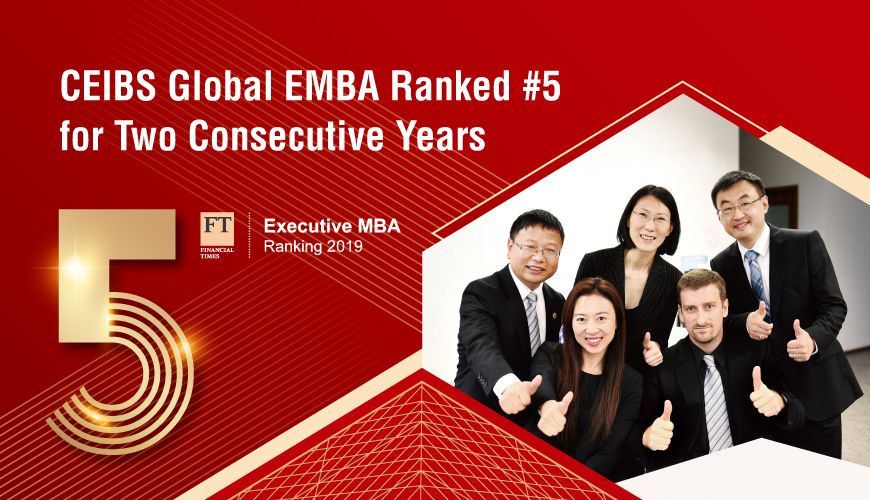
November 18, 2019. Shanghai – CEIBS’ Global EMBA programme has now placed fifth in the world – and first amongst independent (non-joint) programmes in Asia – for the second consecutive year with the release of the latest Financial Times global Executive MBA ranking today. This January, the school’s MBA programme was also ranked fifth by the Financial Times, further highlighting the strength and international influence of CEIBS in the field of management education.
“This year marks the 25th anniversary of the founding of CEIBS and this achievement is a big gift to add to the celebration,” CEIBS President Li Mingjun said. “Over the past 25 years, CEIBS has witnessed the rapid development of China’s economy. During that time, CEIBS has grown into a leading, world-class business school. As China begins to play a more significant role in economic globalisation, the focus of global management education is gradually shifting east. The future calls for talents with both international vision and China wisdom, and CEIBS has assumed the responsibility of cultivating more corporate leaders.”
Due to its stringent standards for participation and diverse criteria, the Financial Times’ annual ranking has become one of the most widely recognised business school rankings in the global management education community. The rankings are based on a comprehensive assessment of 16 categories, covering graduate career progress, school diversity, and teaching and research levels. Corporate social responsibility (CSR) was also included in the ranking review criteria for the second time in 2019.
“With this latest news, for the first time, our EMBA and MBA programmes have ranked in the top ten in the world for two consecutive years,” CEIBS Vice President and Dean Ding Yuan said. “There has been relatively little movement at the very top of the ranking and this is a sign that the market for global management education is reaching a point of maturity. As a business school rooted in China, CEIBS’ success in ranking in the top five for two consecutive years highlights the rise of management education in China and Asia. It also shows the school’s efforts in promoting globalisation have paid off.”
Taking a closer look at the categories factored into the ranking, CEIBS’ Global EMBA graduates have again achieved remarkable results in terms of “salary level” and “salary increase”. CEIBS finished in third place in the world in terms of “salary level”, and has remained in the world’s top five for seven consecutive years. In addition, the school’s “career progress”, “work experience” and “aims achieved” rankings moved up more than ten places each. CEIBS also ranked seventh in terms of “career progress”, where it entered the top ten in the world for the first time. The jump in rankings in these categories corresponds with the increased level of satisfaction alumni have with CEIBS. The school has long been committed to providing excellent service for students and alumni, creating a strong sense of belonging for its alumni community.
In the category of “international faculty”, CEIBS jumped three spots from 2018, while at the same time moving up two positions each in the categories of “international students” and “international course experience”. These results further support the fact that the Global EMBA programme delivers an international, multi-cultural learning experience for students.
The CEIBS Global EMBA programme also leverages its overseas campuses and a strong network of partner schools to facilitate overseas modules at locations on five continents, including Switzerland, the US, Brazil, Israel, India, Ghana and Southeast Asia. These opportunities serve to further enrich the international experience of students.
Equally striking, the school’s “FT research rank” increased 18 places, thus confirming the strength of academic research at CEIBS. Since 2014, CEIBS’ professors have ranked first on Elsevier’s list of most highly cited scholars in China in the category of “Business, Management and Accounting”. In 2017, the school also launched its Real Situation Learning MethodTM, combining classroom learning with real-world experiences where students can visit companies and meet face-to-face with company executives.
“Academic research is an important criterion in business school rankings, and the ‘FT research rank’ is based on both the total and average number of articles published by a school’s current full-time faculty in 50 globally-recognised top economics and management journals,” CEIBS Associate Dean (Research) and Professor of Economics and Finance Xu Bin said. “After many years of continuous effort, CEIBS has established an effective system of faculty research management and incentive policies, which has greatly enhanced faculty research activity and creativity. The big increase of CEIBS’ ’FT research rank’ is a natural reflection of this continuous effort.”
CEIBS’ “corporate social responsibility rank” also rose ten spots, reflecting the various efforts of the school in promoting CSR. CEIBS was the first business school on the Chinese mainland to promote CSR and it holds a series of CSR-related activities each year to encourage alumni to elevate social responsibility to the level of corporate development strategy.
“The CEIBS Global EMBA programme continues to keep pace with the latest economic trends and optimise our curriculum,” CEIBS Global EMBA Director, Associate Dean and Professor of Operations Management Nikolaos Tsikriktsis said. “At the same time, the programme contributes Chinese know-how to overseas companies entering the Chinese market, and has helped usher in the globalisation of Chinese enterprises.”
Earlier this month, the CEIBS 25th Anniversary Celebration was held at the school’s Shanghai, Beijing and Shenzhen campuses. Over the past quarter of a century, with the support of the Chinese government and the European Union, CEIBS has realised many remarkable achievements. Looking ahead, the school will continue to adhere to its motto of “Conscientiousness, Innovation and Excellence”, to focus on China and to contribute to betterment of the world.
CEIBS’ Global EMBA programme has now placed fifth in the world – and first amongst independent (non-joint) programmes in Asia – for the second consecutive year with the release of the latest Financial Times global Executive MBA ranking today. This January, the school’s MBA programme was also ranked fifth by the Financial Times, further highlighting the strength and international influence of CEIBS in the field of management education.
Over the past four decades, China’s reform and opening-up has brought about a dramatic shift in the business landscape for Chinese family firms. On the one hand, family businesses are rare opportunities made possible by government policies, rapid economic growth, consumption upgrade, balanced development between urban and rural areas and among regions, continuous expansion of domestic demand and the “Belt and Road Initiative”; while on the other hand, they are grappling with challenges in adapting to economic transformation and changes in the global economy, and in improving the enterprise system.
Facing both opportunities and challenges, how will family businesses stay dynamic and competitive? As a traditional Chinese saying goes, “Changes in nature occur in an orderly manner on a periodic basis – that is, they conform to some laws.” As the traditional pattern of development is apparently out of date, family businesses need to figure out whether to remain unchanged or to embrace change, and which aspects should be changed or kept constant. As another saying goes, “Constancy goes hand in hand with change – whatever does not need change should stay constant, while whatever needs change should be changed.” When it comes to “constancy vs. change”, two generations of family business leaders tend to be deeply divided and even at loggerheads. Given China’s shifting business landscape, can a new generation of family business leaders combine their ingenuity and international vision with the entrepreneurial spirit of the older generation to lead their companies forward? These questions are worth discussing in depth.
Co-organised by China Family Business Review and CEIBS, the 6th China Family Business Succession Forum & CEIBS 8th China Family Heritage Forum 2019 will bring together family business owners, successors and scholars from the US, Europe, Australia, South-east Asia, Japan and South Korea, as well as Mainland China, Hong Kong, Macao and Taiwan. On the theme of “Constancy and Change”, guests will deliver keynote speeches and participate in roundtable discussions to share exemplary Chinese and overseas family firms’ innovation and entrepreneurship from different perspectives so as to explore how to make family businesses sustainable.
25th anniversary greetings sent during our European alumni reunion last month in Paris
Over 100 alumni, faculty and senior leaders from Europe and China got together in France for a range of exciting events, talks and social activities including a cruise of the River Seine
Happy 25th birthday to CEIBS! Students, alumni, professors and CEIBS’ staff children send congratulatory greetings from all five of our campuses, spread over three continents: Shanghai, Beijing, Shenzhen, Accra and Zurich.