We’re in This Together
CEIBS Visiting Prof Wei Luo shares a special message from Barcelona amidst the coronavirus outbreak.
After two long months of lockdowns, closures and social distancing, life is slowly getting back to normal in Shanghai.
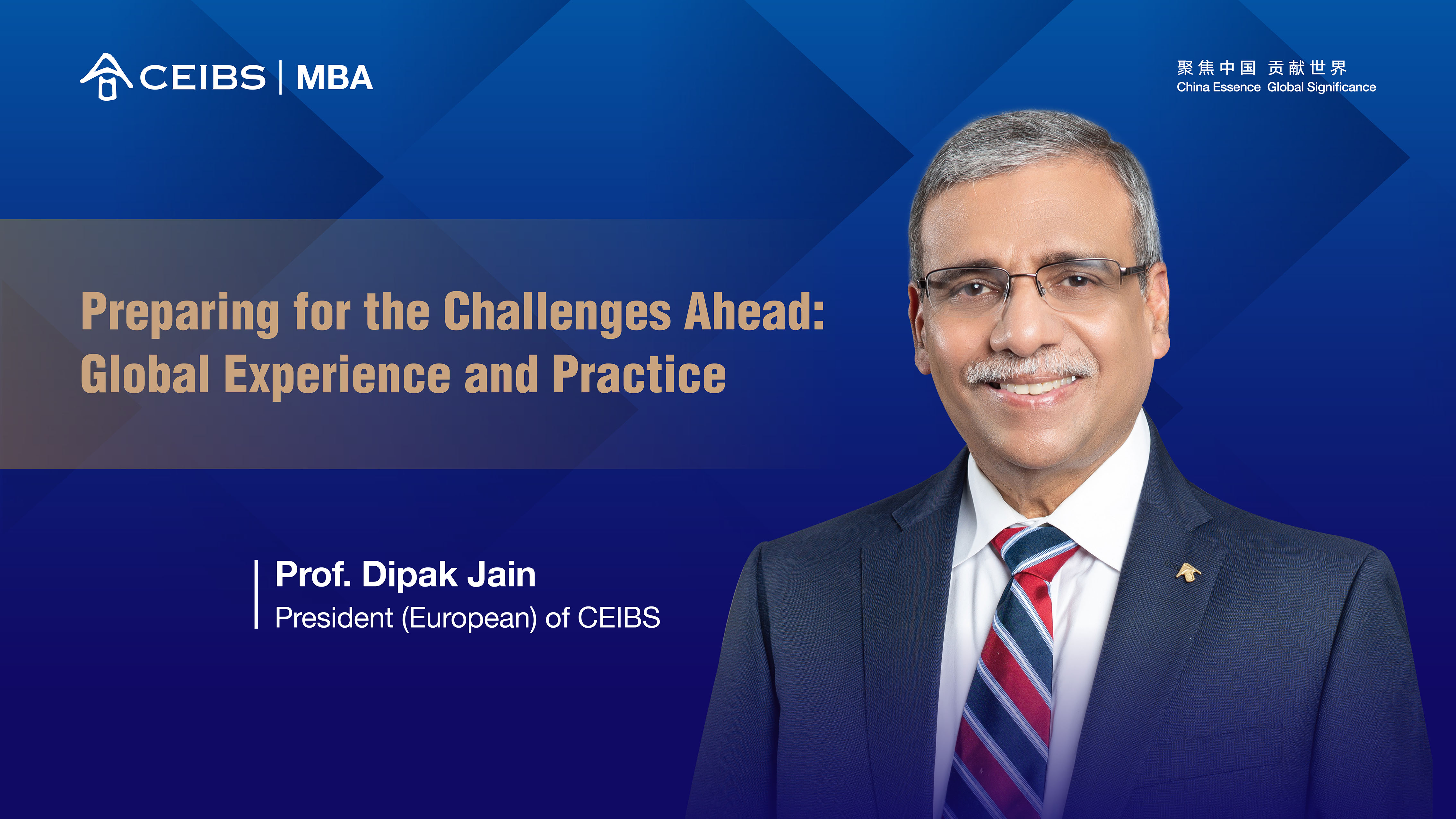
March 18, 2020. Shanghai – CEIBS President (European) Dipak Jain today spoke via webinar with students from the MBA 2020 and 2021 cohorts about how to best manage adversity. Prof. Jain was joined by MBA Programme Director Juan A. Fernandez, Administration Director Ma Ning and Assistant Directors Jennifer Zhao and Steven Ji.
In his address, Prof. Jain stressed that although everyone around the world is facing the same situation, it is how we react that will define our individual outcomes. “We live under the same sky but we seem to have different horizons,” he said.
Prof. Jain also shared his personal experiences while dealing with uncertainties following the 9/11 terrorist attacks (2001), SARS outbreak (2003) and Indian Ocean Tsunami (2004), where his efforts in managing the response to these crises made it possible for his students to emerge from the situations with minimum losses. He said that, through his experiences, he has learnt that people who do best in times of crisis are the ones who have their feet on the ground. As such, he added, it is imperative that we do not lose touch of reality. Prof. Jain further reassured the students that their health and safety is school’s foremost concern at this point and called for their co-operation in these trying times.
Administration Director Ma Ning then updated the students on the measures that school is taking to ensure the smooth delivery of courses, such as moving lectures online and rescheduling overseas electives.
Assistant Director of the Career Development Center Jennifer Zhao also reassured students that the school has been very proactively reaching out to alumni and recruiters to secure career opportunities for the students. The CDC is currently preparing to host career fairs in Beijing, Shenzhen, Ningbo and Hangzhou. The events will be followed by networking sessions with executive search firms and Chinese enterprises and CDC consultants have already reached out to over 250 employers. In addition, CEIBS President Li Mingjun has asked the Chairman of the CEIBS Alumni Association to make student job placements one of their primary responsibilities.
Finally, Prof. Jain encouraged students to show courage and patience in the face of adversity. “No challenge ahead of you is greater than the force behind you,” he added.
This was followed by a Q&A session wherein Prof. Jain directly addressed questions from students and also welcomed their suggestions.
CEIBS President (European) Dipak Jain today spoke via webinar with students from the MBA 2020 and 2021 cohorts about how to best manage adversity.
Check out some of the video highlights from around our Shanghai campus.
March 12, 2020. Shanghai – With the emergence of the COVID-19 crisis and its negative impact across all major businesses and operations, there is now concern about how to make the best of this situation. To help sort through the adversity, the CEIBS Career Development Centre organised their first sharing session of the spring, inviting three industry experts to share their insights and advice. More than 130 current MBA students, as well as MBA and GEMBA alumni participated in the session.

According survey findings shared by Peggy Zhu, Eastern China Director of Michael Page, HR and business leaders have different concerns about the impact of the COVID-19 crisis on the middle- and high-end talent markets. For example, 29% respondents were concerned about production capacity and business achievements in Q1; 24% about efficiency and staff return plan; 17.5% about personnel structure and hiring in future; 14.5% about their company and the industry’s future; and 13.5% about staff welfare. Will the COVID-19 affect candidates’ decision on job searching? The survey showed 41.5% were afraid to change jobs; 40% remained neutral and tended to favour stability; and 18.5% had no concerns and were continuing to actively search.
In terms of market segments, Peggy also said that challenges lie ahead in automotive, travel, tourism and hospitality, retail and luxury, global supply chain and logistics industries. On the other hand, e-commerce, gaming and home entertainment, healthcare and life sciences, insurance, online education, personal care and hygiene, and technology sectors could all come out as potential winners. To capture potential opportunities, Peggy suggested that candidates develop a growth mind-set during this unusual period of time. For instance, practice interviewing through Skype or WeChat, invest in oneself by reading and studying, build a wider network and be more open and flexible to job opportunities.
For Sharon Yang, Managing Director and CHRO from SPDB Silicon Valley Bank, the current epidemic reminded her of SARS in 2003. That crisis offered several examples of how companies such as JD, Alibaba, SF and C-Trip converted these situations into further business success. “The success of these companies lie in the founders,” she said. “They’re not predicting the future – they see the opportunities that are not seen by others.” Sharon also pointed out that to become anticipatory leader in a VUCA era, one should be future-based, aim for long-term goals, be cautious about what will happen, be willing to take risk and be a creative thinker.
Sharon said that MBA students need to become both futurists and strategists. On one hand, with sharp eyes and business acumen, students need to explore ideas and future trends in other industries that might be replicated. On the other hand, with critical thinking on the corporate strategy level, they need to ask probing questions, such as what might impact the outcome in a negative way and whether there are unintended consequences of going down a particular path. “Just like the things that happened in the technology sector, new firms seemingly coming from nowhere have quickly surpassed or even acquired conventional top players, so you have to see the business context from a higher perspective all the time,” Sharon added.
From Sharon’s perspective, life span increase or technology transformation could be seen as a “hard trend”, but the epidemic situation as a “soft trend”. She believes that an anticipatory leader will be able to build an organisation to deal with various “soft trends” by absorbing different opinions, coupled with an attitude of actively questioning oneself proactively.
Besen Fu (CEIBS MBA2016), HR Director for Alibaba’s Local Service Company, shared his view from a corporate angle. Amidst the epidemic crisis, many companies have focused on cost savings, specifically by reducing and freezing headcounts. By doing so, they sacrifice organisation and talent optimisation for survival right now. However, other companies have done the opposite and invested more resources in building-up, with the aim to maintain their competitiveness and position in the long run.
In Besen’s view, “opportunities and challenges will coexist.” Citing a recent real-world case, he said a senior candidate completed two rounds of interviews at Alibaba which led to the final one, but finally decided to quit the process due to the COVID-19 virus because she preferred stability to change. In that sense, this turned out to be a good opportunity for other candidates who were also pursuing this opportunity.
Besen also suggested that MBA students be more open-minded and do not lose confidence and patience. He stressed that now is a very good time to leverage personal networks, because getting an internal referral is the best way to land a job, and companies love internal referrals.
After the sharing session, students and alumni interacted further with the speakers during a Q&A. A common piece of advice for this challenging time, from all three presenters was to be brave, to jump out of your comfort zone, and to be more proactive and more open.
Finally, the speakers mentioned that no matter how up-and-down the market is, it is essential for candidates to understand themselves – particularly their interests, motivations and values – in order to clarify their long-term career and life goals.
With the emergence of the COVID-19 crisis and its negative impact across all major businesses and operations, there is now concern about how to make the best of this situation. To help sort through the adversity, the CEIBS Career Development Centre organised their first sharing session of the spring, inviting three industry experts to share their insights and advice.
Wednesday, March 11, 2020. Shanghai – Over the past few weeks, CEIBS faculty have shared their professional insights on the business and economic impact of the COVID-19 outbreak with media outlets such as Bloomberg, Xinhua, China Daily and CGTN, serving an important guide for policymakers and business owners during this difficult time. Here is a brief round-up of some of the things they have said:
“Normally at this time of the year – right after the Chinese New Year holiday – the central bank would tighten liquidity to keep the markets from overheating. However, what we are seeing now is the release of 1.2 trillion RMB on the same day that 1.05 trillion RMB worth of reverse repos are set to mature, meaning that the central bank is injecting 150 billion RMB in net cash. That’s to fend off risks posed by the coronavirus.”
– Executive Deputy Director of CLIIF and Adjunct Professor of Economics and Finance Sheng Songcheng in Policy easing measures will boost market sentiment, relieve pressure on businesses (CGTN, February 3, 2020)
“The most effective way to reduce any potential impact on the economy is to keep the epidemic under control since the PHEIC status will become due within three months and the WHO could change it at any time, depending on the subsequent developments. Meanwhile, the central authorities have spared no efforts in restoring business confidence.”
– CEIBS Essilor Chair in Accounting Xu Dingbo in Economy still on even keel, say experts (China Daily, February 4, 2020)
“As long as services such as express delivery and logistics are back to normal, the decline in offline sales caused by the epidemic may be largely offset by the increase in online shopping.
China’s digital economy has been a stabiliser amid the virus outbreak, hedging economic risks. Provided that we give play to the respective advantages of corporate, social and government mechanisms, we will definitely see that ‘spring comes after winter’.”
– Professor of Finance and Accounting Oliver Rui in Digital economy helps offset coronavirus impact (Xinhua, February 7, 2020)
“China’s finance industry is probably one of the better prepared sectors for dealing with this crisis. It grew in tandem with the development of the internet and technology, and the advantages of that effort are showing now.”
– Professor of Finance and Accounting Zhao Xinge in China’s Trade-From-Anywhere Markets Face Their Biggest Test (Bloomberg, February 12, 2020)
“For me, the really important thing is not to look at the numbers. China has traditionally had a very strong government. If the government really wanted to, it could easily increase gross domestic product. With a liquidity flood that Li Keqiang has already refused several times, economic growth could easily be increased to over six percent. However, in the current situation, the most difficult thing is to keep the balance: between loosening liquidity to support companies, on the one hand, and on the other hand, avoiding the creation of new bad debts for the banking system.
If the service sector is hit even harder, we will see more social tensions and unemployment. That is why the government, particularly local governments, has started supporting small businesses. [Recently], there have been a lot of small measures that support these companies.”
– CEIBS Vice President and Dean Ding Yuan in Shanghai economic expert: Coronavirus already has “very serious consequences” (Handelsblatt, February 21, 2020)
“[Any new] policies [introduced in response to the virus outbreak] should be seen as a natural extension of the constant pledges by the Shanghai government to continue its opening-up endeavours, stay transparent and be responsive to enterprises’ needs.
The epidemic is no doubt a stress test for the government. But a good handling of the crisis will convince foreign businesses that there is no better place than China to do business in and thrive.”
– Professor of Economics and Finance Xu Bin in Silver lining amid epidemic (China Daily, March 2, 2020)
“An economic downturn caused by negative shocks can generally be hedged by fiscal and monetary policies, which is exactly what the Chinese government and central bank are doing. But what is more important to China’s economy is the long-term GDP trend.
As such, we need to ask ourselves, what toll will the Sino-US trade war and the epidemic have on the long-term growth of China’s economy? And, how should we respond to reduce the long-term negative impact?”
– Professor of Economics and Finance Xu Bin in COVID-19 outbreak a good opportunity for long-term economic reforms (CGTN, March 4, 2020)
“The COVID-19 epidemic will affect consumption in the first quarter and perhaps longer. According to our calculations, China’s lost consumption may be around 1.3 trillion RMB ($187.6 billion USD) in the first three months of this year. Household income may also drop in wake of the epidemic, which in turn will weigh down consumption in the subsequent months.
Regarding exports, there are still many uncertainties with COVID-19 spreading at the global level. But the global spread of the virus will likely disrupt the global supply chain and have a negative impact on China’s foreign trade.”
– Executive Deputy Director of CLIIF and Adjunct Professor of Economics and Finance Sheng Songcheng in Infrastructure investment main tool to offset coronavirus shock to the economy (Global Times, March 8, 2020)
“During this special time, regulatory innovation should be kept up in time to break through unnecessary policy constraints and give full play to the potential of fintech in serving stores. For example, a full range of online banking services could be promoted and tested in severely affected areas such as Hubei Province. Under the premise of technical support and risk control, pilot banks could open I-type bank accounts for individual users remotely, enabling small and micro business owners and store operators in these areas to open a fully functioning bank account without leaving their home and handle various financial services such as collections, transfers and loans.”
– Professor of Finance and Accounting Oliver Rui in How can China’s government help small businesses navigate cash crunch? (CGTN, March 10, 2020)
For more on CEIBS in the news, please visit our media coverage page here.
Over the past few weeks, CEIBS faculty have shared their professional insights on the business and economic impact of the COVID-19 outbreak with media outlets such as Bloomberg, Xinhua, China Daily and CGTN, serving an important guide for policymakers and business owners during this difficult time. Here is a brief round-up of some of the things they have said.
China Jiayou! Friends and colleagues from around the CEIBS community share messages of encouragement for those affected by the recent coronavirus outbreak
CEIBS Distinguished Professors Jean-Pierre Raffarin, Dominique de Villepin and Pascal Lamy offer messages of hope and support to everyone in the CEIBS community.
March 2, 2020. Shanghai – Traditionally, the Lunar New Year holiday is a time when Chinese families reunite. This year, however, the COVID-19 outbreak instead created many new challenges and left many in the CEIBS community feeling anxious.
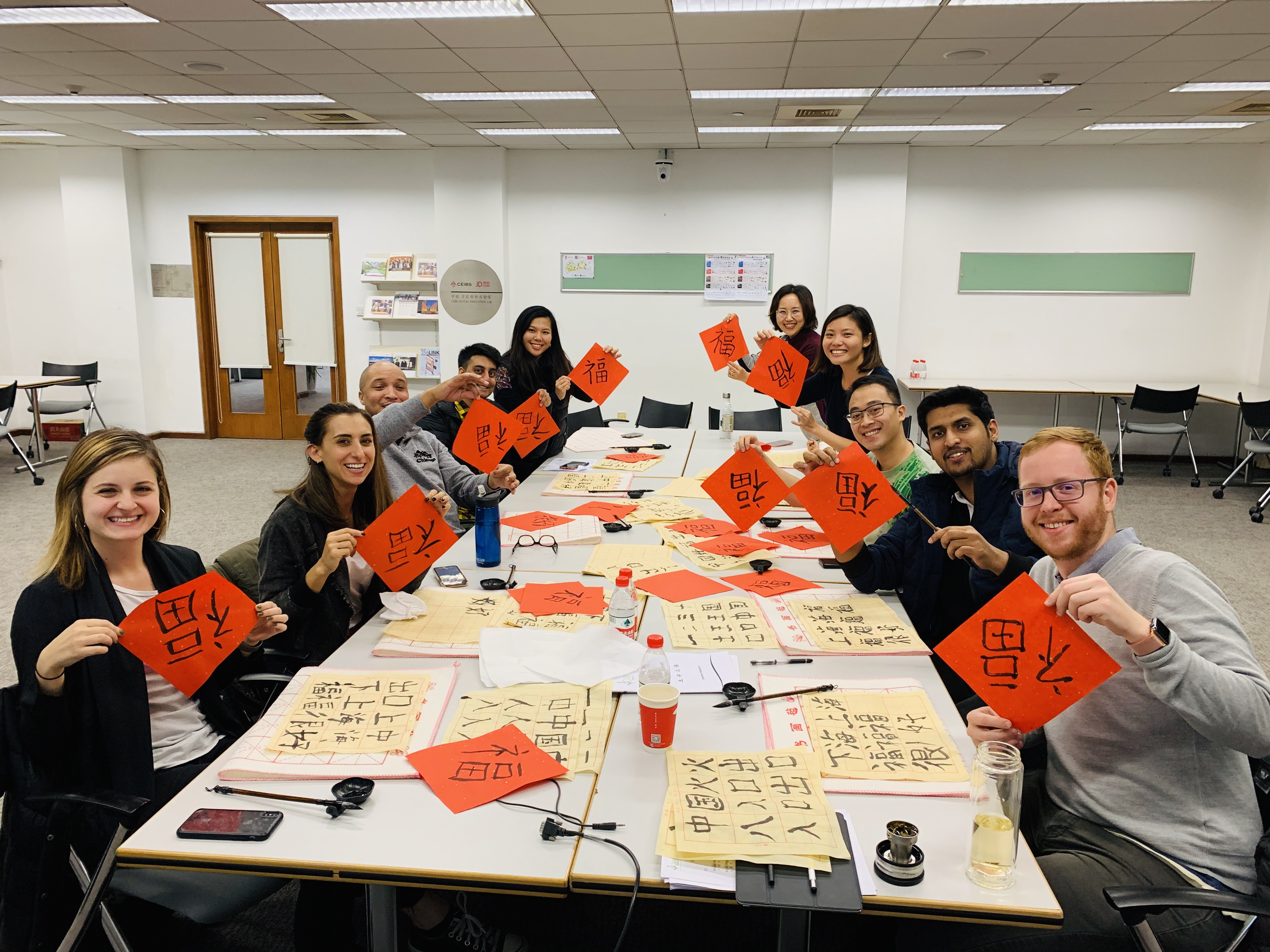
CEIBS’ MBA programme is often characterised by its internationalisation. Amongst the 360 MBA students currently enrolled at CEIBS, 115 are international students. During the Lunar New Year holiday, more than 20 MBAs stayed at CEIBS’ Shanghai campus, more than half of whom were international students. Meanwhile, four exchange students from overseas business schools who are study at CEIBS were travelling in Tibet. How to ensure their health and safety became a challenging test for everyone.
In response to the outbreak, CEIBS quickly established the CEIBS Working Team for Coronavirus Prevention led by the school’s president, Li Mingjun. The MBA programme also set up a Class Coordinator Emergency Working Group and an International Student Emergency Working Group with the operations, enrolment and career development teams taking turns on duty. Each of these teams worked both online and offline to ensure everyone’s safety was treated as a top priority.
In addition to continuously updating the status of students staying at the school, CEIBS established a pass system for students and designated special living areas on campus. School staff also worked to ensure a sufficient stock of available health and safety supplies. Subsequently, on January 27, the school issued a notice delaying the upcoming term, further upgraded prevention measures, implemented enclosure management, and strengthened the sanitation supervision of the canteen.
Due to language and cultural barriers, it was difficult for many international students to access official, up-to-date information about the progress and prevention of the epidemic. At the same time, many experienced loneliness and helplessness as a result of being away from home. Despite the extended break from classes, student WeChat groups were particularly active. Class co-ordinators not only checked students’ daily condition, but also offered them encouragement and updated them with latest policies and information.
“My friends and family were worried about me,” says Mayuko Kawata (MBA 2020), a Japanese student who stayed on campus during the holiday. “But I told them that the CEIBS campus is the safest place in Shanghai.”
Students have also assisted in fighting the virus in various ways. When CEIBS alumni from Wuhan launched a fundraising initiative to purchase medical supplies, for example, both Chinese and international MBAs stepped up to donate money. As a result of their efforts, masks and goggles have been delivered to more than 20 hospitals in affected areas.
Despite the outbreak, student recruitment activities continued in February as more than 150 applicants successfully completed their admissions interviews with the use of video conferencing technology. The interviews, conducted from home, spanned four time zones and were co-ordinated by school faculty and staff in six different countries and regions.
The epidemic has also tested CEIBS’ use of digitalisation in teaching. In order to successfully complete terms three and four, the school will launch an online teaching platform, with classes scheduled to begin this week.
On February 21, MBA faculty and students also held a special online meeting, with more than 230 students participating. The meeting was used to respond to student questions about teaching, graduation and job hunting. During the session, CEIBS Vice President and Dean Ding Yuan noted that, although the epidemic had had a significant impact on people’s lives, it has also heralded in the coming era of digitisation and globalisation. Prof. Fernandez added that CEIBS will continue to put students’ safety first, and encouraged everyone to quickly adapt to the new online learning mode.
In retrospect, the events of the past few weeks have created a lot of turmoil. Despite the fact that CEIBS’ MBA programme was once again ranked #5 in the world in the Financial Times’ global MBA ranking at the end of January, the school has been more focused on what the future holds in store for us. The epidemic has been a test for every organisation, and CEIBS is no exception. Nevertheless, we believe that the expertise, hard work, and efficiency of our people will carry us through these uncertainties.
Traditionally, the Lunar New Year holiday is a time when Chinese families reunite. This year, however, the COVID-19 outbreak instead created many new challenges and left many in the CEIBS community feeling anxious.
February 28, 2020. Shanghai – Over the past few weeks, CEIBS has received many thoughtful and encouraging messages from our friends and partners around the world. We would like to thank everyone for your care and support. At the same time, our thoughts continue to be with those who have been affected by the COVID-19 outbreak, both in China and throughout the world. We are confident that together we will overcome the epidemic.


Over the past few weeks, CEIBS has received many thoughtful and encouraging messages from our friends and partners around the world. We would like to thank everyone for your care and support. At the same time, our thoughts continue to be with those who have been affected by the COVID-19 outbreak, both in China and throughout the world. We are confident that together we will overcome the epidemic.