The story of how a CEIBS MBA saved a family business and offered a new start in life for one diligent student
"I knew I had to change."

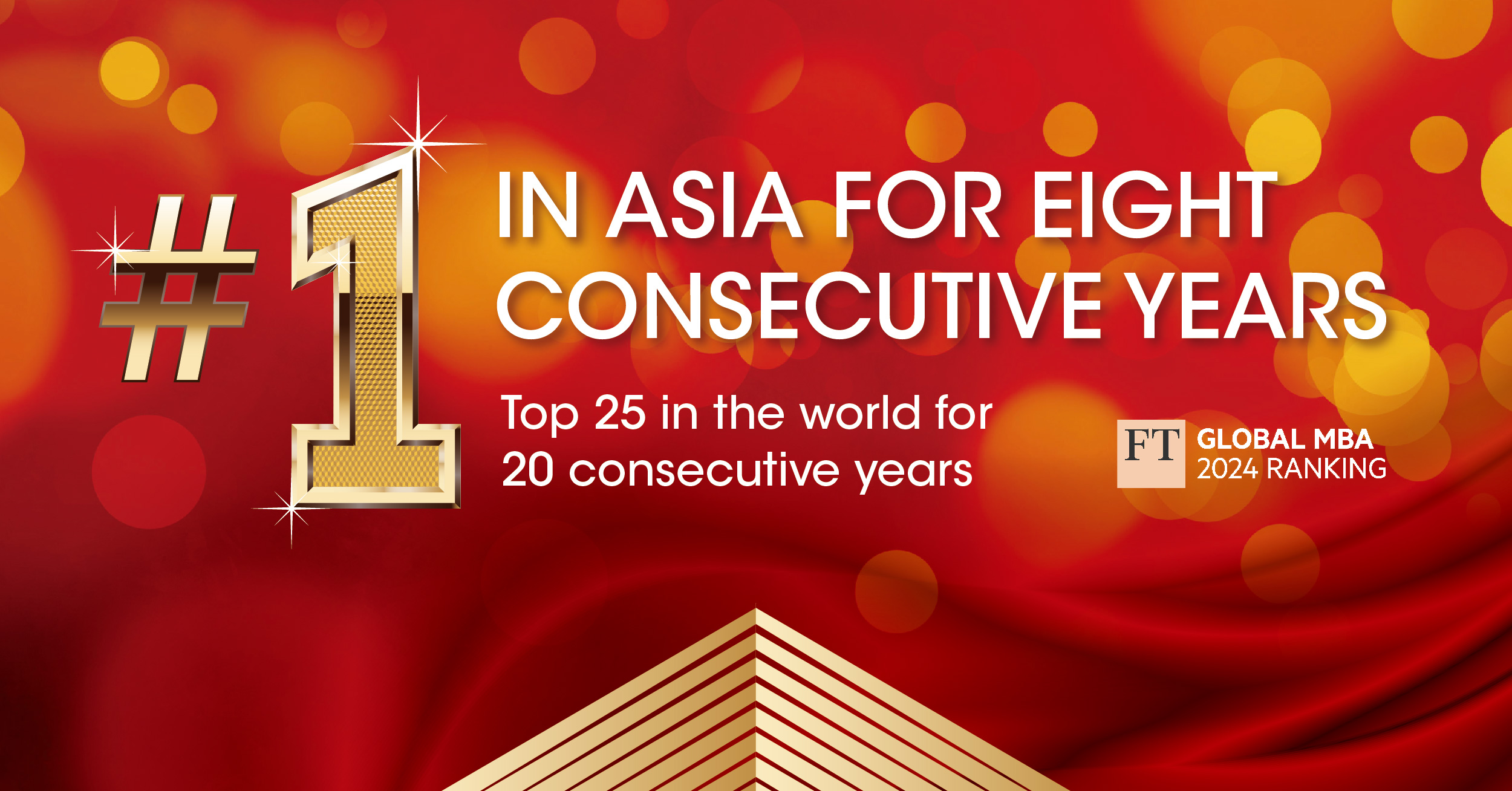
February 12, 2024. Shanghai – CEIBS has once again claimed the #1 spot in Asia (and #21 in the world) in the Financial Times’ global ranking of MBA programmes, marking the eighth consecutive year that it has come out on top in the region.
This achievement demonstrates not only CEIBS’ sustained excellence and commitment to offering a world-class MBA programme, but also a resilience in the face of significant headwinds, offering us a chance to celebrate important improvements while reflecting on what we need to do better to meet the demands of modern business education.
Wang Hong
CEIBS President
This year’s ranking is released at a time of both opportunity and uncertainty for business schools in China. After three years in which international travel and in-person education were drastically affected by the pandemic, the ranking is reflective of and greatly affected by the challenging global environment of the past few years. However, the world’s full reopening allows us to look forward to a more promising future.
Dominique Turpin
CEIBS President (European)
The Financial Times rankings are decided based on 21 indicators divided into three sections: Career progress, Diversity, and Research/ESG. In the latter category, we saw an incredible increase of 39 places from 75 to 36 globally in Carbon Footprint ranking, underscoring our steadfast dedication to walking the talk on ESG and increasing the sustainability of our school.
Frank Bournois
CEIBS Vice President and Dean
CEIBS also demonstrated both improvement and consolidation in some other important areas. The depth and quality of our alumni network was reflected in a climb of 12 places in our Alumni Network rank; the school also saw a climb 16 places from 30 to 14 in the world in Employed at 3 Months ranking, demonstrating our ability to deliver tangible career benefits to our students. This was bolstered by an increase of one place in our Career Service rank. We also entered the Top 10 in the world for Salary Percentage Increase ranking with a move from 11 to 10.
Zhang Weijiong
CEIBS Vice President & Co-Dean
These impressive gains allowed us to maintain our leading position in the region despite setbacks in other areas that were unavoidably affected by global factors, particularly the pandemic and macro trends in the wider global economy.
Shameen Prashantham
CEIBS Associate Dean (MBA) and Professor of International Business & Strategy
While there is always room for improvement, growth, and further learning, the continued strength of our MBA programme in the face of external challenges provides grounds for optimism in our ability to climb to greater heights in the coming years and serves to justify our belief in an MBA programme that provides ‘China Depth, Global Breadth’.
About CEIBS MBA
CEIBS’ full-time English-language MBA programme is an intensive 12- or 16-month journey combining academic rigor, experiential projects and personal transformation. Designed with the school's motto of ‘China Depth, Global Breadth’ in mind, students build on business fundamentals before taking deep dives into electives. Learn more here.
About CEIBS
China Europe International Business School (CEIBS) was co-founded by the Chinese government and European Union (EU) in 1994 and has campuses in Shanghai, Beijing, Shenzhen, Accra (Ghana), and Zurich (Switzerland).
CEIBS is committed to educating responsible leaders versed in ‘China Depth, Global Breadth’ and serves as an important platform for exchange and co-operation between China, Europe and the world.
The school offers MBA, Finance MBA, EMBA, Global EMBA, Hospitality EMBA, DBA and Executive Education programmes. CEIBS has ranked #1 in Asia in the Financial Times global ranking of MBA programmes for eight consecutive years and has ranked #2 in the world on its global ranking of EMBA programmes for four consecutive years.
CEIBS has more than 29,000 alumni from over 91 countries and regions around the world and has provided management training for more than 220,000 executives worldwide.
CEIBS has once again claimed the #1 spot in Asia (and #21 in the world) in the Financial Times’ global ranking of MBA programmes, marking the eighth consecutive year that it has come out on top in the region.

The increasingly widespread view of ESG as being a pragmatic, forward-thinking kind of business sense – beyond its moral and progressive characteristics – is a relatively new phenomenon.

Bala Ramasamy is Associate Dean and Director of the Global EMBA (GEMBA) programme at CEIBS. As a Professor of Economics, he is highly valued by students both for his rigorous academic knowledge and humorous temperament in the classroom.
"This can be a hint that Li Qiang may accord further significance [to the private sector]."

CEIBS has hosted countless warm interactions between China and Europe for nearly three decades, but the recent visit of the Irish Tánaiste Micheál Martin attracted particularly passionate advocates of deeper connection between the two sides, to the school’s Shanghai campus.
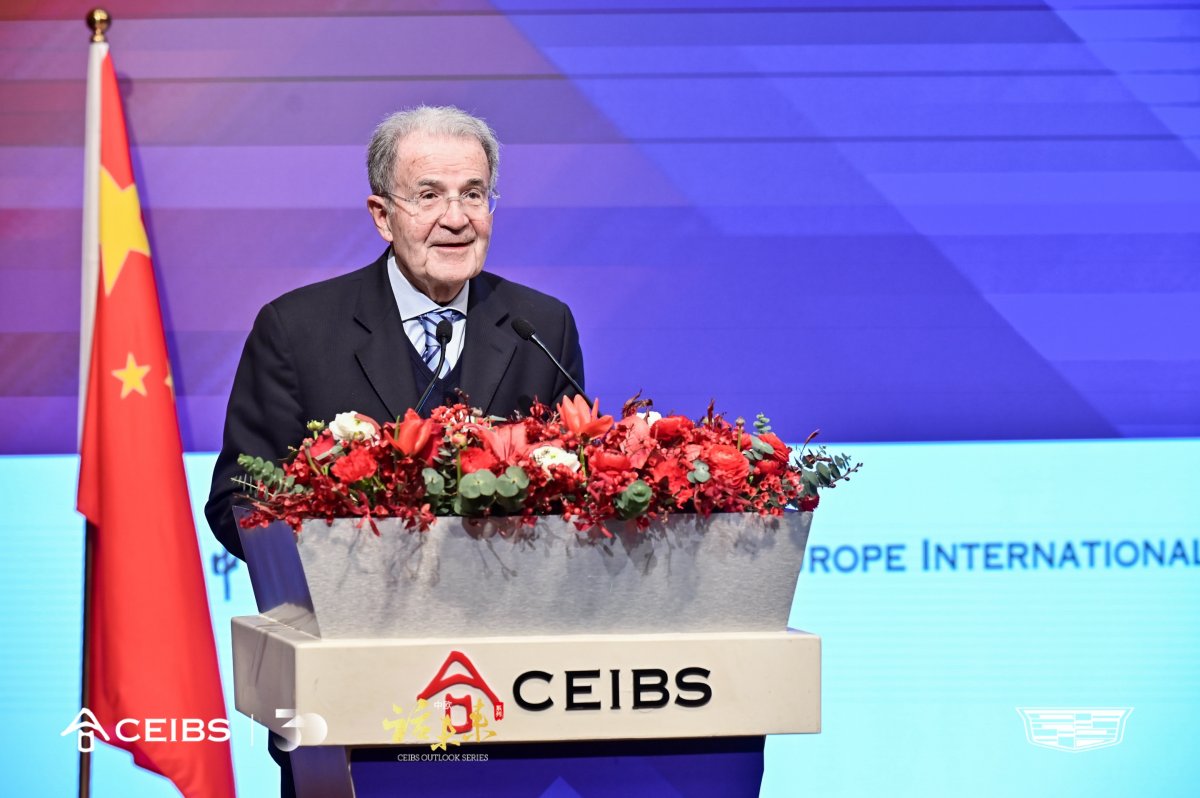
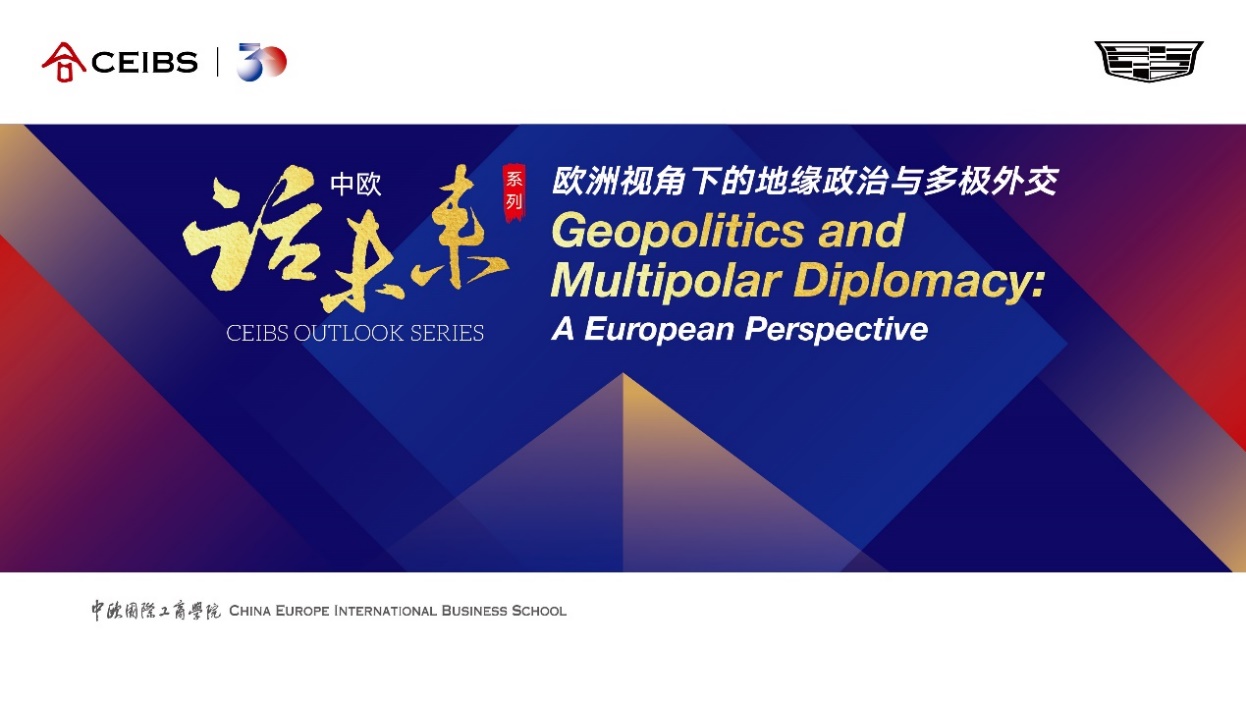
January 18, 2024. Shanghai – The EU-China Comprehensive Agreement on Investment is conducive to bolstering global trade, Former Italian Prime Minister and Former President of the European Commission Romano Prodi said during a talk on Geopolitics and Multipolar Diplomacy: A European Perspective at CEIBS Shanghai Campus today.
The event, part of the CEIBS Outlook Series, highlighted the challenges and opportunities shaping today’s global landscape, and the role diplomacy plays in navigating this complex terrain. More than 300 people, including representatives of nearly 20 European Consuls General in Shanghai, Chamber of Commerce members, businesspeople, and CEIBS students and alumni attended the event.
In 2010, President Prodi served as the Chair Professor of the European Union at CEIBS, and in 2015 became a member of the CEIBS Board of Directors, where he has continued to steadfastly support the development of the school.
In his welcome speech, CEIBS President (European) Dominique Turpin expressed gratitude for President Prodi's contribution in fostering EU-China collaboration and his unwavering support for CEIBS. He further emphasised that in the wake of global shifts accelerated by the pandemic and regional conflicts, the world finds itself at a crossroads, making today's topic extremely timely in a rapidly evolving global landscape.
“On the geopolitical front, we find ourselves in a time of unprecedented change marked by a confluence of challenges and opportunities. The dynamics of multipolar diplomacy further complicate this landscape, calling for a need to take nuanced and strategic approaches to international relations,” he said.
In his keynote speech, President Prodi pointed out that after decades of a unipolar world, we now find ourselves back in a bipolar world dominated by two competing systems. “In today’s world, there’s not only the power of the US, but also other emerging economies as a result of globalisation. However, if we overemphasise ideological or value frameworks, we’re less likely to reach agreements,” he said.
“International politics is like a bridge. People pass through - cars, trucks, pedestrians. You don’t have to drive the same; have the same ideology or even the same values. You just have to respect the traffic rules,” he continued.
President Prodi, an economist who twice served as Italian Prime Minister, is considered one of the fathers of the euro and is a staunch supporter of EU enlargement who increased the number of member states to 25 during his tenure.
Having first come to China in 1983, President Prodi noted that there are vast differences between Chinese and US foreign policies. “China accounts for 19% of the world’s population, with only 7% of the world’s arable land, which requires a large amount of renewable energy and raw materials. It means that China's foreign policy must be continuous and long term to deal with its people, whereas American foreign policy is, in general, dependent on the President or whoever is in power.”
In spite of this, he pointed out that the world should be prepared for a new era of diplomatic relations, including changes in the BRICS grouping, the rise of India, and the rise of Middle East powers.
He further suggested that with great changes in economic diplomacy and the increasing role of the government in national economies, competition has now risen from being solely among companies to being among states which, he noted, is entirely different from just 25 years ago.
In such a context the European Union, as the second largest economy in the world, is destined to play a greater role in multilateral coordination.
“A fragmented Europe needs policies and regulations to attract investment; one window of opportunity lies in the EU-China Comprehensive Agreement on Investment,” he explained.
Following his keynote remarks, President Prodi then engaged in an interactive conversation with CEIBS Vice President and Dean Frank Bournois, during which they explored EU-China relations, challenges faced by the EU, and the role of institutions like CEIBS in today’s evolving business world.
"For CEIBS, if it wants to change the business environment, it is essential to have more students from all backgrounds", said President Prodi, adding that it’s also crucial for them to focus on exchange and connections in order for CEIBS to fulfil its mission as an international business school.
Following the Q&A, CEIBS President Wang Hong presented a gift to President Prodi on behalf of the school.
The event then concluded with a strategic cooperation agreement signing ceremony between CEIBS and Bologna Business School in Italy, where President Prodi previously served as President of the Supervisory Board. According to the agreement, the two schools will enhance research and faculty exchanges and bolster more cooperation opportunities in their Executive Education programmes in the future.
The signing ceremony was led by CEIBS President Wang Hong and CEIBS President (European) Dominique Turpin on behalf of the school.
The EU-China Comprehensive Agreement on Investment is conducive to bolstering global trade, Former Italian Prime Minister and Former President of the European Commission Romano Prodi said during a talk on Geopolitics and Multipolar Diplomacy: A European Perspective at CEIBS Shanghai Campus today.

In celebration of CEIBS’ upcoming 30th anniversary in 2024, the CEIBS Outlook Series will welcome Professor Romano Prodi, former Prime Minister of Italy and former President of the European Commission, to give a keynote speech at our Shanghai campus on Thursday, January 18. A distinguished figure in international politics and diplomacy, Professor Prodi, will delve into the complex and timely theme of "Geopolitics and Multipolar Diplomacy: A European Perspective", exploring the intersection of these two vital topics in today's world. The discussion will highlight the multifaceted challenges and opportunities that arise as nations navigate an intricate geopolitical landscape.
A world shaped for decades by globalisation has swiftly become characterised by geopolitical risk. Accumulating shocks such as the pandemic and regional conflicts have persisted, significantly reorganising global structures and relationships, and resulting in escalating geopolitical tensions. Consequently, there is a growing inclination to reconsider globalisation as countries seek to “de-risk”.
Given his distinguished background and rich experience, Professor Romano Prodi is uniquely positioned to provide profound insights into the complex dynamics of geopolitics and the evolving landscape of multidimensional diplomacy. Following his keynote speech, Professor Prodi will engage in an interactive conversation with CEIBS Vice President and Dean Frank Bournois, an expert in corporate governance with a focus on the study of how large European firms identify, manage, and develop their future leaders. Join us on January 18 to glean valuable insights into the challenges and opportunities shaping the global landscape, as well as a deeper understanding of the role diplomacy plays in navigating this complex terrain.
Date: Thursday, January 18, 2024
Time: 15:00-17:30
Venue: Shanghai Petrochemical Auditorium, CEIBS (699 Hongfeng Road, Pudong, Shanghai)
Language: Simultaneous Interpretation Provided
| Jan. 18 (Thursday) 15:00-17:30 Venue: Shanghai Petrochemical Auditorium, CEIBS |
|
| 15:00-15:30 | Registration and Networking |
| 15:30-15:40 |
Welcome Address |
| 15:40-16:10 |
Keynote Speech by Romano Prodi |
| 16:10-16:40 |
Dialogue with the audience |
| 16:40-17:30 | Reception |
In celebration of CEIBS’ upcoming 30th anniversary in 2024, the CEIBS Outlook Series will welcome Professor Romano Prodi, former Prime Minister of Italy and former President of the European Commission, to give a keynote speech at our Shanghai campus on Thursday, January 18. A distinguished figure in international politics and diplomacy, Professor Prodi, will delve into the complex and timely theme of "Geopolitics and Multipolar Diplomacy: A European Perspective", exploring the intersection of these two vital topics in today's world. The discussion will highlight the multifaceted challenges and opportunities that arise as nations navigate an intricate geopolitical landscape.

January 10, 2024. Shanghai – From technological development to geopolitical upheaval and uncertain economic prospects, 2024 promises to be a year of change. We asked some of our faculty members to offer their predictions for the year ahead; read on to find out what they think the next 12 months may have in store.

Nana Yaa A. Gyamfi
Lecturer of Management
“I predict that significant leaps will be made in the development of AI this year, and this will play a definitive role in how human capital is recruited and managed. Rather than wipe out jobs and livelihoods as feared, the innovations will unlock new levels of versatility in people, making for exciting changes in how work is organised and executed.”

Frank Yu
Professor of Finance, Associate Dean & Director of Finance MBA Programme
“In 2024, I anticipate a significant shift in global investment trends, with a marked increase in sustainable and ESG investments. As awareness and regulations around climate change intensify, I expect a surge in green financing and ESG-compliant portfolios, influencing major investment decisions across sectors.”

Bala Ramasamy
Professor of Economics, Associate Dean & Director of Global EMBA Programme
“I am optimistic about 2024. The Chinese authorities have taken a string of measures to revive the economy – increasing liquidity in the money market, cleaning up local government finances, easing visa requirements to promote tourism and business travel, etc. We should begin to see the impact by Chinese New Year or latest by March 2024. However, 2024 is also an election year in the US, which means political rhetoric and China bashing will be stepped up. It’s we, who are key opinion leaders within our circles, who should feel confident about the future of China, and that will definitely make a difference!”

Guo Bai
Assistant Professor of Strategy and Entrepreneurship
“2024 will be a year of change. For business leaders, changes can mean risk, but they also embody opportunities. I observe three mega trends ahead. First, Chinese consumers will become increasingly more sensible and their preferences more diverse. Second, new technological breakthroughs, especially generative AI, will continue to materialize. Third, Chinese companies will continue to explore overseas markets and become more active in international competition. All three trends can indicate the destruction of the old and the ample space for the new and innovative to grow. The question is: who will seize the chances and how?”

Albert Hu
Professor of Economics
“The Chinese economy will continue to gain strength, not least because the government is likely to step up fiscal and monetary stimulus. Geopolitical tensions will remain a headwind for China.”

Gianfranco Siciliano
Assistant Professor of Accounting
“In 2024, the critical issue will be information pollution (disinformation and misinformation), which affects and accentuates several global risks, such as climate, conflicts and geo-economic confrontation, human trafficking, and migration. I advocate more urgent actions, including research and business leader involvement, to address the harm caused by deliberate information pollution, especially as it increasingly affects both societal and business aspects.”

Matthias Spitzmuller
Associate Professor of Organisational Behavior
“In the age of ChatGPT, knowledge has become ubiquitous. Highly specialised knowledge is available in a heartbeat, even to novices. Thus, knowledge by itself is no longer an effective differentiator for businesses. More than ever, the focus will shift from the tangible to the intangible, from the management of products and services to the management of people and cultures. Of growing importance here is the management of interfaces that exist between different functional domains of knowledge, hierarchical levels, within and across organisations, and across time. So, how can an organisation manage the interfaces that determine how it integrates the wealth of knowledge that is at their disposal? The answer to this question may seem like an old-fashioned one in the time of AI: there will be an increasing emphasis on integrative leadership that connects people across boundaries within and across organisations.”

Dr. Robert Straw
CEIBS Zurich CEO
“Buckle up and get ready for a roller-coaster ride! Over half the world’s population will vote on their national leadership in 2024. The tensions in the Ukraine and the mid-East will continue to dampen geopolitics. Recession could hit many economies and China could possibly fall into deflation, which would not be good as it is THE engine of global growth. AI will continue to fascinate us, but debates about ethics will probably result in the taming of AI via regulation. In 2024, firms and households globally should tighten their belts and focus on fitness and stability, not growth.”
From technological development to geopolitical upheaval and uncertain economic prospects, 2024 promises to be a year of change.
From the pandemic to geopolitical tensions and shifts in economic power, recent years have called the viability of globalisation, once taken for granted, into question.
As part of the CEIBS Outlook Series, former Director General of the World Trade Organization and CEIBS Distinguished Professor Pascal Lamy came to our Shanghai campus for a speech and discussion on the theme “What’s Next for Globalisation?”, delving into what recent developments mean for the future of the one of history’s most powerful ideas. Watch the full event here.