Prof. Zhu Tian talks with French business daily Les Echoes about the effects of Donald Trump's planned tarrifs on the Chinese economy
Thoughts on the US presidential election.
Professor Zhu Tian gives his thoughts on the effect of the upcoming US election on China trade policy.
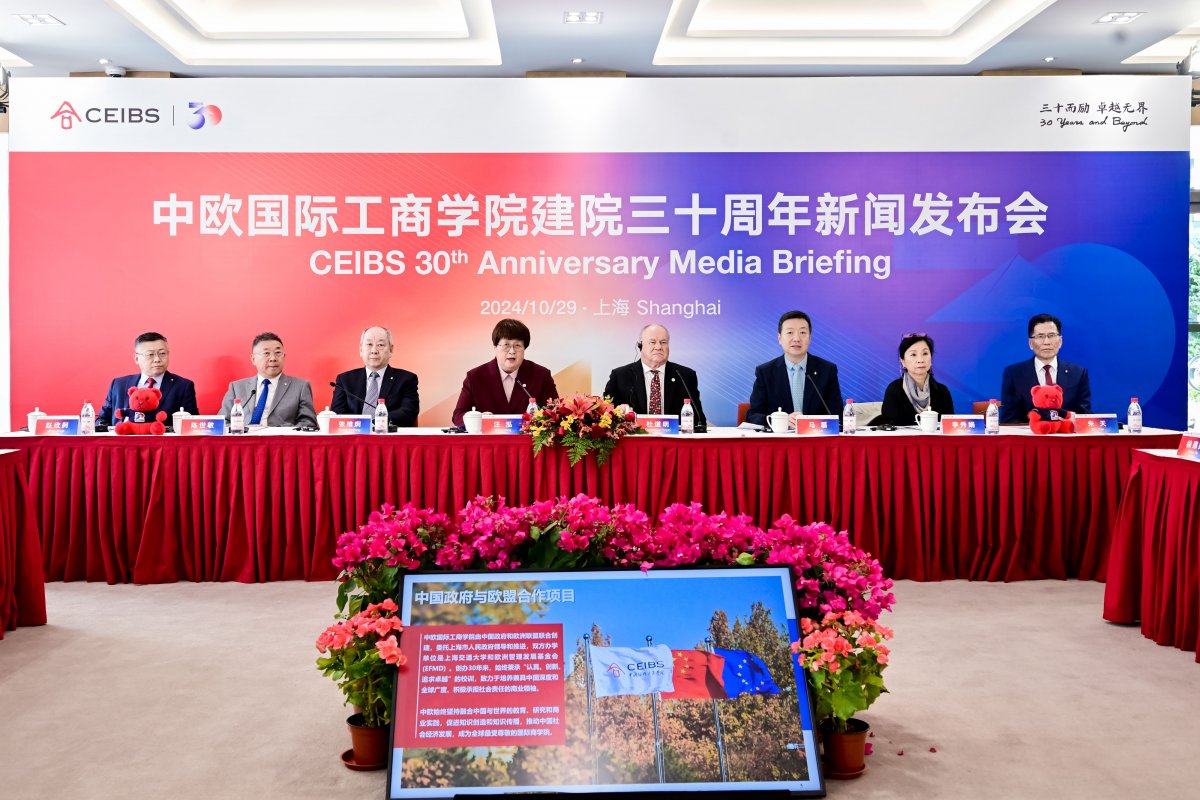
October 29, 2024. Shanghai – A media briefing celebrating the 30th anniversary of CEIBS was held today on the CEIBS Shanghai campus, with nearly 50 leading media outlets from China and around the world in attendance, including Poets & Quants, Reuters, Les Echos, Handelsblatt, South China Morning Post, Shanghai Daily, China Daily, Xinhua News Agency, People's Daily, Economic Observer, and more.
This event marked not just a moment to reflect on CEIBS’ past successes but also a chance to lay out an inspiring vision for its next chapter, as the school continues to set the bar for global management education that bridges China and the world.
Co-founded by the Chinese government and European Union in 1994, CEIBS is China’s only business school to originate from government-level collaboration. Born in an era during which China urgently needed management talent and sought to learn from global management practices, CEIBS has achieved remarkable success over the past three decades thanks to the efforts of generations of CEIBS faculty, students, and staff, all of whom have demonstrated exceptional innovation and perseverance. From an interpreter of Western management theory to a creator and disseminator of Chinese management knowledge in an era of globalisation, CEIBS has boldly carved out a path of internationalisation rooted in China and reaching across the globe, firmly establishing itself among the world’s top business schools and becoming a prominent Chinese brand in global management education.
In his opening remarks, CEIBS Vice President and Co-Dean Zhang Weijiong extended a warm welcome and heartfelt thanks to distinguished guests and media. Reflecting on CEIBS’ journey over the past 30 years, he emphasised that CEIBS has remained committed to nurturing business leaders with a global vision to drive economic and social development. With a pioneering spirit, it has continuously advanced innovation in China’s management education, building bridges between China, Europe and the world through international cooperation. These achievements are a testament to the success of China’s reform and opening-up, the ever-growing demand for business talent, and the steadfast support of the Chinese government, the EU, and the school’s executive partners.
Prof. Zhang further recognised the media’s essential role in shaping CEIBS’ brand and reputation, adding that CEIBS has established extensive relationships with over 300 major media outlets in China and abroad, which have helped share CEIBS’ voice across more than 80 countries and regions. Moving forward, he asserted that CEIBS will deepen its work with the media as it strives to create an even brighter future.
CEIBS President Wang Hong then delivered a keynote speech offering a reflection on and comprehensive summary of CEIBS’ extraordinary 30-year journey. She noted that since its establishment, CEIBS has remained committed to educating responsible leaders versed in “China Depth, Global Breadth” in line with its motto of “Conscientiousness, Innovation and Excellence”, recounting that leaders from the Chinese central government and the EU have lauded CEIBS as “a cradle of excellent executives” and “a role model of EU-China co-operation”, respectively. Over the past 30 years, CEIBS has evolved into a world-leading business school and a vital bridge for facilitating economic and cultural exchange between China, Europe and the world. Today, CEIBS brings together over 120 world-class faculty from around the globe and has cultivated a network of over 30,000 accomplished alumni across 91 countries and regions, many of whom lead prominent organisations, driving economic development and advancing business practices globally.
President Wang then further elaborated on CEIBS’ "Eight Strategic Priorities" and their impact on the school’s development. She highlighted that these objectives - reinforcing CEIBS’ top-tier position, expanding CEIBS’ world-class faculty, creating signature research areas, diversifying CEIBS’ programme portfolio, bridging China and Europe, serving regional development strategies, exemplifying ESG education, and empowering CEIBS alumni - have laid a solid foundation for CEIBS' sustained growth in the future. “By implementing our Eight Strategic Priorities, CEIBS has firmly established itself among the world’s leading business schools. Not only have we consistently ranked among top-tier business schools globally, but this year, our Global EMBA programme achieved a further historic breakthrough by being named #1 globally in the 2024 Financial Times EMBA rankings. This achievement showcases CEIBS’ exceptional impact and strong competitiveness on the global stage,” President Wang said.
She then analysed five emerging trends in management education today. First, business schools should cultivate talent with a global vision and a commitment to sustainable development to navigate the uncertainties of globalization; Second, technological advancements are transforming management education, making it essential to connect with smart manufacturing and high-tech industries to combine theory and practice; Third, China’s drive for high-quality economic growth requires strategic support from business schools, and CEIBS has a unique role to play by leveraging its geographic advantages to address regional talent needs; Fourth, intense global competition is pushing business schools to continually innovate; Finally, business schools need to deepen their commitment to ESG practices shifts in economic growth models and the advance of “dual carbon” strategies.
President Wang went on to stress that, faced with transformative changes, CEIBS will focus on five priorities to thrive in today’s dynamic world. First, the school will embrace a global perspective by fostering collaboration between China, Europe, and the world; Second, it will support China’s modernisation with its unique positioning of “China Depth, Global Breadth”; Third, it will advance ESG principles to nurture more socially responsible business leaders; Fourth, it will enhance the integration of academic disciplines with industry, innovation, and talent networks to build a forward-looking business education model; Fifth, it will advance CEIBS’ Eight Strategic Priorities to enhance its reputation and global influence.
Looking ahead, President Wang stated that CEIBS will continue to integrate education, research, and business practice between China and the world, advance knowledge creation and dissemination, drive China’s social and economic progress, and strive to become the world’s most respected international business school in line with its motto of “Conscientiousness, Innovation and Excellence”.
In a keynote speech entitled The Future of Global Management Education, CEIBS President (European) Dominique Turpin then took an in-depth look at the current challenges and potential opportunities facing business schools, shedding light on how they can stay ahead of the curve in a rapidly changing business world. He noted that CEIBS, as a collaborative venture between China and Europe, has thrived for 30 years; far exceeding the typical lifespan of international joint ventures. This lasting success, he said, can be attributed to three key factors: the shared goals between the school’s Chinese and European partners, effective and timely communication with a pragmatic approach, and the school’s unique positioning of "China Depth, Global Breadth."
In response to ongoing transformations in global management education, Prof. Turpin emphasised that CEIBS should continuously adapt to technological advancements to keep pace with new demands on teaching. He further noted that today’s students are highly familiar and skilled in the use of technology, requiring CEIBS to anticipate their needs and adjust course offerings to align with real-world demands. CEIBS is also working, he said, to bridge the gap between academic research and business practice, translating research insights into practical recommendations that hold real value for the corporate world.
“Over the last ten or 15 years, business schools and management education have been drastically changed by the emergence of new technologies,” he said, highlighting five key initiatives for business schools to effectively answer today’s challenges: Rethinking Research Objectives, Establishing Cross-functional Areas of Expertise, Prioritising Impact, Refreshing the Curriculum, and Actively Engaging Stakeholders (students, alumni, faculty, business leaders, and other departments).
Prof. Turpin further emphasised CEIBS’ active role and notable impact in driving these transformative initiatives. He highlighted that CEIBS has not only achieved academic excellence but also, through close industry partnerships, provides students with valuable practical experience and expansive career development opportunities. “Looking ahead, CEIBS will continue to nurture executives with a global perspective and hands-on expertise, contributing CEIBS’ insights to the advancement of the global economy and business management,” he concluded.
The keynote speeches were followed by the launch of CEIBS Think Tank Book Series, including the CEIBS Cutting-Edge Perspectives Series, the CEIBS Case Centre Book Series, and the CEIBS Lujiazui Think Tank Book Series.
As Editor of the CEIBS Cutting-Edge Perspectives Series, CEIBS Professor of Management Jean Lee introduced the book series, which comprises nine volumes consisting of over one million words and spans a broad range of topics including marketing management, service management, ESG (environment, social, and governance), human resources, leadership, and finance. “Cutting-edge, transformative, and entrepreneurial spirit are the three defining features of the collection,” Prof. Lee said.
This was followed by an in-depth analysis of the CEIBS Case Centre Book Series by Editor and CEIBS Professor of Accounting Chen Shimin, who reflected on the growth of the CEIBS Case Centre since its founding in 2001. He noted that case-based teaching is inherently aligned with CEIBS' mission to "educate responsible leaders versed in ‘China Depth, Global Breadth’”. Over the past 20 years, the CEIBS Case Centre has developed over 1,500 case studies that reflect China’s unique business environment, highlighting real-world business practices and capturing the essence of China’s corporate culture, he added, and through partnerships with five of the world’s leading case repositories - including Harvard Business Publishing, Ivey Publishing, and the Case Centre - teaching cases developed by CEIBS researchers have served over 700,000 people in 1,100 schools and institutions across more than 80 countries and regions nationwide.
Prof. Chen added that the newly released series of books, which represents decades of dedication and insight from CEIBS researchers, covers classic CEIBS cases, award-winning international cases, and high-quality teaching cases developed by CEIBS case researchers. The entire series focuses on management issues in the Chinese context and aims to share Chinese experience and support classroom teaching that meets international standards. “We hope that we have not only built an outstanding business school within 30 years, but also documented an era through our case studies - 30 years of CEIBS, and 30 years of China,” Prof. Chen said.
Next, CEIBS Professor of Finance and Accounting and Editor of the CEIBS Lujiazui Think Tank Book Series Zhao Xinge elaborated on the development of the CEIBS Lujiazui Institute of International Finance (CLIIF). As a leading think tank supporting the development of Shanghai as an international financial centre, CLIIF has made significant contributions to the opening and development of Shanghai's finance industry by actively tracking and studying global financial markets along with the latest issues in Shanghai's financial landscape over the past 17 years.
The recently released book series, comprising five volumes, spans key areas of financial research, including financial openness, innovation, risk regulation, regional economic development, asset management, sustainable finance, and high-quality development of capital markets. As a collective innovation based on the institute’s knowledge and ongoing research efforts, it is also a tribute to CEIBS' 30 years of excellence in education and to the transformative effects of Shanghai's emergence as an international financial centre.
The event also featured the launch of a new CEIBS history book, entitled China Europe International Business School 1994–2024. Based on previous 15th and 20th-anniversary editions, the book is now being published in English for the first time. The Chinese version contains a total of more than 610,000 characters, and the English version over one million words, both featuring 454 unique photographs that capture precious historical moments in the CEIBS story.
This was followed by an interactive Q&A session during which President Wang Hong, President (European) Dominique Turpin, Vice President and Co-dean Zhang Weijiong, and CPC Secretary Ma Lei took questions from various media outlets on topics including educational innovation, talent development, and international collaboration.
In addition, an exhibition entitled CEIBS’ 30th Anniversary Exhibition of Educational Achievements was officially unveiled during the event. Featuring a rich variety of displays, including illustrated panels, valuable historical documents and artifacts, videos, and interactive installations, the exhibition offers visitors a comprehensive experience of CEIBS' remarkable 30-year journey and its many achievements along the way.
On the sidelines of the event, CEIBS Professor of Economics, Santander Chair in Economics and Associate Dean (EMBA) Zhu Tian hosted a Media Salon with selected international journalists representing leading media outlets from multiple countries and regions, including France, Germany, the US, and Hong Kong, on the topic of China’s Economic Outlook. The salon offered a glimpse of the quality of the school’s distinguished international faculty team and provided valuable insights on the current macroeconomics trends shaping China’s economic landscape.
Beginning with a popular analysis of China’s economy by Paul Krugman, which broadly prescribes greater consumer spending as a remedy for China’s relatively sluggish recent economic performance, Prof. Zhu posed a number of counter intuitive questions about China’s economic model, questioning whether it is really driven by investment, exports, and a large trade surplus, whether China’s technological progress is really slowing down, whether the Chinese government really does not want to increase consumption, and whether China really has only focused on production and investment rather than consumption in recent years. Using rich statistical data, he argued that in most cases, the answers are more complicated than those typically presented in articles like Krugman’s, and aimed to debunk its diagnosis of China's current economic state.
Prof. Zhu argued that rather than consumption, much of China’s stellar economic growth over recent decades is down to three key drivers: investment (accumulation of physical capital, education (accumulation of human capital, and technological progress (accumulation of technologies). As such, he concluded by offering a two-pronged strategy for tackling some of China’s current economic woes: launching substantive reform measures to reassure private and foreign businesses about China’s commitment to market reform and openness, and the use of strong fiscal and monetary policies like issuing of government bonds and quantitative easing to resolve debt and liquidity issues in the real estate and local government sectors.
After the press conference, Presidents Wang Hong and Dominique Turpin sat down for in-depth interviews with a number of media outlets to discuss CEIBS’ future development.
A media briefing celebrating the 30th anniversary of CEIBS was held today on the CEIBS Shanghai campus, with nearly 50 leading media outlets from China and around the world in attendance.
To celebrate the 30th anniversary of CEIBS’ founding, we invited former world leaders, former school presidents, distinguished colleagues in management education, and other important figures from the school’s history to offer their thoughts on this special milestone. Here, we hear from Former Director General of the World Trade Organisation and CEIBS Distinguished Professor Pascal Lamy.
Learn more about CEIBS here.
To celebrate the 30th anniversary of CEIBS’ founding, we invited former world leaders, former school presidents, distinguished colleagues in management education, and other important figures from the school’s history to offer their thoughts on this special milestone. Here, we hear from Former Director General of the World Trade Organisation and CEIBS Distinguished Professor Pascal Lamy.
Learn more about CEIBS here.
October 22, 2024. Shanghai – In a complex and rapidly changing global landscape marked by geopolitical competition, a move away from globalisation, and the rapid advancement of disruptive technologies, the world needs responsible, visionary, and globally minded business leaders. It also requires robust communication and exchange between China and Europe, two vital players on the world stage.
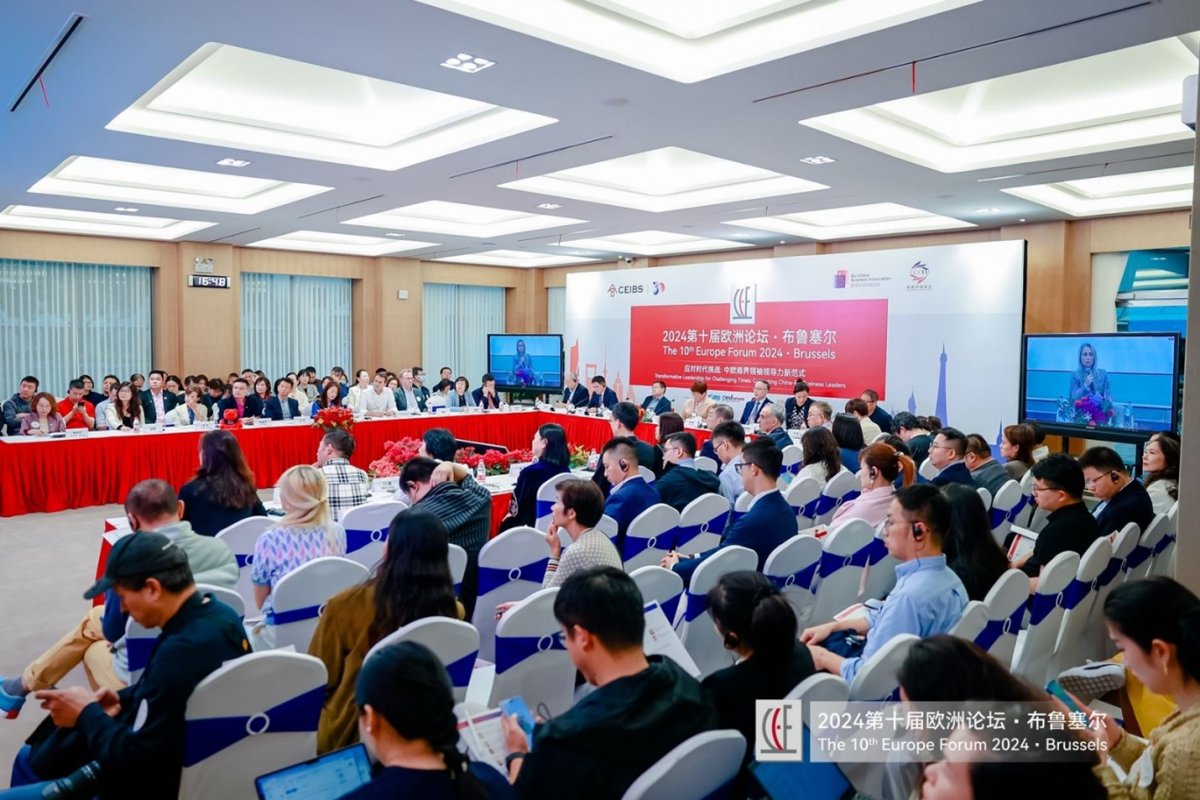
In the year that marks the 30th anniversary of CEIBS’ founding, the 10th Europe Forum 2024 was held today at dual venues in Brussels and Shanghai. Organised by CEIBS together with the EU-China Business Association and China Chamber of Commerce to the EU, the forum brought together decision-makers, entrepreneurs, and experts from China and the EU to explore the theme of “Transformative Leadership for Challenging Times: Cultivating China-EU Business Leaders”, ahead of the 50th anniversary of the establishment of EU-China diplomatic relations in 2025.
During her welcome address, CEIBS President Wang Hong pointed out that, overall, changes in the global economy are primarily being driven by two major forces: a disruptive technological revolution, and the emergence of a new kind of globalisation.
She further explained that, on the one hand, given the accelerated progress of the “fourth industrial revolution”, disruptive technologies like artificial intelligence are profoundly reshaping the global economic landscape and international business operations. On the other hand, global phenomena such as economic decoupling, supply chain disruption, and “small yard, high fence” approaches to competition have in recent years had a significant impact on global economic cooperation and trade.
“The world needs a new type of globalisation that is more open, inclusive, equitable, and structured around win-win outcomes, and China and the EU should play a key role as promoters of this transformation," President Wang said.
She added that as China’s only business school to originate from government-level collaboration, CEIBS is committed to educating responsible leaders versed in “China Depth, Global Breadth” and building a bridge connecting China with Europe and the world, noting that in the latest Financial Times EMBA Rankings 2024, the CEIBS Global EMBA programme has made a historic breakthrough by ranking first in the world for the first time.
Standing on the threshold of a new starting point on the 30th anniversary of the school’s founding, the times have entrusted CEIBS with an important mission and responsibility, and the school will continue to contribute its wisdom to strengthening the economic prosperity of China, Europe and the world, President Wang concluded.
Executive Director of the EU-China Business Association Gwenn Sonck, in her own welcome address, then underscored the depth of interdependence between the EU and China, each being the other's second-largest trading partner with daily traded goods totalling €2.3 billion a day.
“Despite global economic slowdowns and geopolitical tensions, China remains one of the fastest-growing major economies, with a projected growth of 4.8% for 2024, contributing one-third of global growth. The Chinese market is, and remains, too important to ignore,” she said.
In a time of reflection and transformation for businesses, Ms. Sonck highlighted that European and Chinese companies must adapt to navigate a challenging and increasingly uncertain business environment, and actually need certainty and clarity of rules and regulations.
“European companies need a new playbook for operating in China, and Chinese companies must also adapt to this changing environment,” she explained, adding that China’s leadership in innovation, particularly in AI and electric vehicles, attracts many companies to operate “in China, for China”.
Ms. Sonck then emphasised the need for transformative leadership, including adaptability and visionary thinking, in facing today's fast-changing market.
“European and Chinese CEOs must understand each other’s business environments, and we encourage business leaders to meet in person and engage in open, direct dialogue. Such exchanges will help bridge cultural gaps and pave the way for sustainable partnerships. In challenging times, transformative leaders have the power to turn obstacles into opportunities.”
In his opening address, Minister of the Mission of the People's Republic of China to the European Union Zhu Jing noted that “how the world will look in the future depends on the choices made by China and the EU,” adding that amid a complex international landscape, China and the EU, two major forces driving multipolarity, play a key role in facilitating global peace and stability for common development.
“Both China and the EU are participants and beneficiaries of globalisation, and we should join hands to support free trade, promote fair competition, maintain the stability of supply and industrial chains, and advocate for a more inclusive and beneficial economic globalisation to achieve common development,” Minister Zhu said.
“The essence of China-EU cooperation lies in complementing each other's strengths and achieving mutual benefit and win-win outcomes. The nearly 50-year relationship of China-EU relations has proven that differences do not mean that we stand against each other, and that disagreements do not hinder cooperation” he went on, emphasising that “the key is to have political will and resolve.”
Minister Zhu added that as next year marks the 50th anniversary of the establishment of diplomatic relations between China and the EU, China-EU relations are at a critical juncture. “We sincerely hope that our friends in the business community can seize this opportunity, uphold a pioneering spirit of hard work and innovation, and serve as a bridge to promote dialogue and cooperation between China and the EU,” he encouraged.
During her keynote speech, Former Vice President of the European Parliament Dita Charanzová emphasised the importance of communication and collective leadership, stating that the crucial element for the success of future leaders will be the ability to adapt to challenges and fast-moving developments and communicate their vision in a way that people can understand and follow.
“In the face of multiple challenges in today’s world, a potential leader might be able to network, to talk their way into a position; however, it takes a team to actually lead well,” she said, highlighting the importance of effective communication and collaboration in leadership.
“Every generation is a bridge to the next [...] a true leader must always be a bridge. If you only speak to one generation, you will always leave one part of our society behind, so we must build bridges. We must build bridges between our politicians, between our businesses and our politicians, between different cultures, and between different societies. This is a task for CEIBS for the next 30 years,” she concluded.
The event also featured two roundtable discussions on the themes of Innovative Leadership Amid Disruptive Business Transformations and Cross-Cultural Leadership in the Context of Corporate Globalisation, moderated by Founder and Chairman of the Supervisory Board of Aspen Institute Central Europe Ivan Hodac and CEIBS President (European) and Professor of Marketing Dominique Turpin, respectively.
In his closing speech, Former Director General of the World Trade Organisation and CEIBS Distinguished Professor Pascal Lamy emphasised the importance of the trade and investment relationship between the EU and China, highlighting that both economies require open trade to sustain growth.
“China and the EU share a fundamental similarity: we need open trade [...] Both the EU and China are facing shrinking demography and slower growth potential. Thus, we increasingly need open trade to access dynamic markets and grow our economies,” he said.
Prof. Lamy also stressed the necessity for open communication channels to manage trade relations amid rising complexities. He advocated for greater understanding and collaboration between business leaders from both sides, highlighting the role of education in fostering this understanding.
“I believe that for businesspeople, whether old or young generations, such as our students at CEIBS, it is now even more important than in the past to try and use our teaching to bring more knowledge and understanding to the relationship between the EU and China,” he concluded.
To wrap up the event, Secretary General of the China Chamber of Commerce to the EU Fang Dongkui expressed his deepest gratitude to all the participants who made the event a tremendous success.
He noted that the rise of disruptive technologies presents new challenges to business leaders in both China and the EU, requiring them not only to have a visionary outlook but also to maintain resilience and effectively engage in cross-cultural communication.
“China-EU trade and cultural cooperation are vital not only to the people of the two regions, but also for the peace and stability of the world. Next year marks the 50th anniversary between China and the EU; over these 50 years, business leaders from each have set many successful examples of collaboration by embracing a spirit of openness, cooperation, and pragmatism,” he said.
The forum was hosted by CEIBS President (European) and Professor of Marketing Dominique Turpin, who in his closing remarks summarised the key learnings of the event with the acronym “CARE”; C for choice, commonalities, cross-communication, and courage; A for adaptability and agility; R for mutual responsibility and respect; and E for education and the engagement of different generations.
About CEIBS
Founded in 1994, CEIBS was jointly established by the Chinese government and European Union and is the only business school in China founded by government-to-government collaboration. With five campuses in Shanghai, Beijing, Shenzhen, Zurich, and Accra, the school offers MBA, Finance MBA (FMBA), EMBA, Global EMBA, Hospitality EMBA, DBA (Switzerland), PhD, and Executive Education programmes. CEIBS has been named #1 in Asia in the Financial Times ranking of global MBA programmes for eight consecutive years and was recently named #1 in the world in the Financial Times 2024 EMBA Ranking.
Since its launch in 2012, the CEIBS Europe Forum Series has hosted nearly 30 overseas forums in ten countries and regions, featuring more than 200 keynote speakers and attracting more than 8,000 participants from government, industry, and academia. With a focus on the most pressing issues of the day, the forums serve to maintain open dialogue between China and the world and to promote cooperation in tackling the challenges that affect us all.
In the year that marks the 30th anniversary of CEIBS’ founding, the 10th Europe Forum 2024 was held today at dual venues in Brussels and Shanghai.
What can aspiring business leaders learn from the past few decades of relatively rapid GDP growth in Central and Eastern Europe? What lessons can be gleaned from its position as a bridge between East and West? On their latest global module, our Global EMBA participants travelled to Hungary and the Czech Republic to find out with company visits, lectures, and more.
Learn more about our Global EMBA, ranked #1 in the world by the Financial Times, here.
What can aspiring business leaders learn from the past few decades of relatively rapid GDP growth in Central and Eastern Europe? What lessons can be gleaned from its position as a bridge between East and West? On their latest global module, our Global EMBA participants travelled to Hungary and the Czech Republic to find out with company visits, lectures, and more.
Learn more about our Global EMBA, ranked #1 in the world by the Financial Times, here.
CEIBS would not be the acclaimed institution that it is today without its exceptional team of international faculty. Prof. Yang Wei is Associate Professor of Management at CEIBS. Focusing on corporate strategies and entrepreneurship in high technology settings, she is particularly interested in how firms’ strategies of innovation and knowledge creation are shaped by their surrounding industrial and social contexts, especially by their interactions with rivals, external collaborators, users, investors and the media.
Learn more about Prof. Yang and our distinguished faculty here.
CEIBS would not be the acclaimed institution that it is today without its exceptional team of international faculty. Prof. Yang Wei is Associate Professor of Management at CEIBS. Focusing on corporate strategies and entrepreneurship in high technology settings, she is particularly interested in how firms’ strategies of innovation and knowledge creation are shaped by their surrounding industrial and social contexts, especially by their interactions with rivals, external collaborators, users, investors and the media.
Learn more about Prof. Yang and our distinguished faculty here.

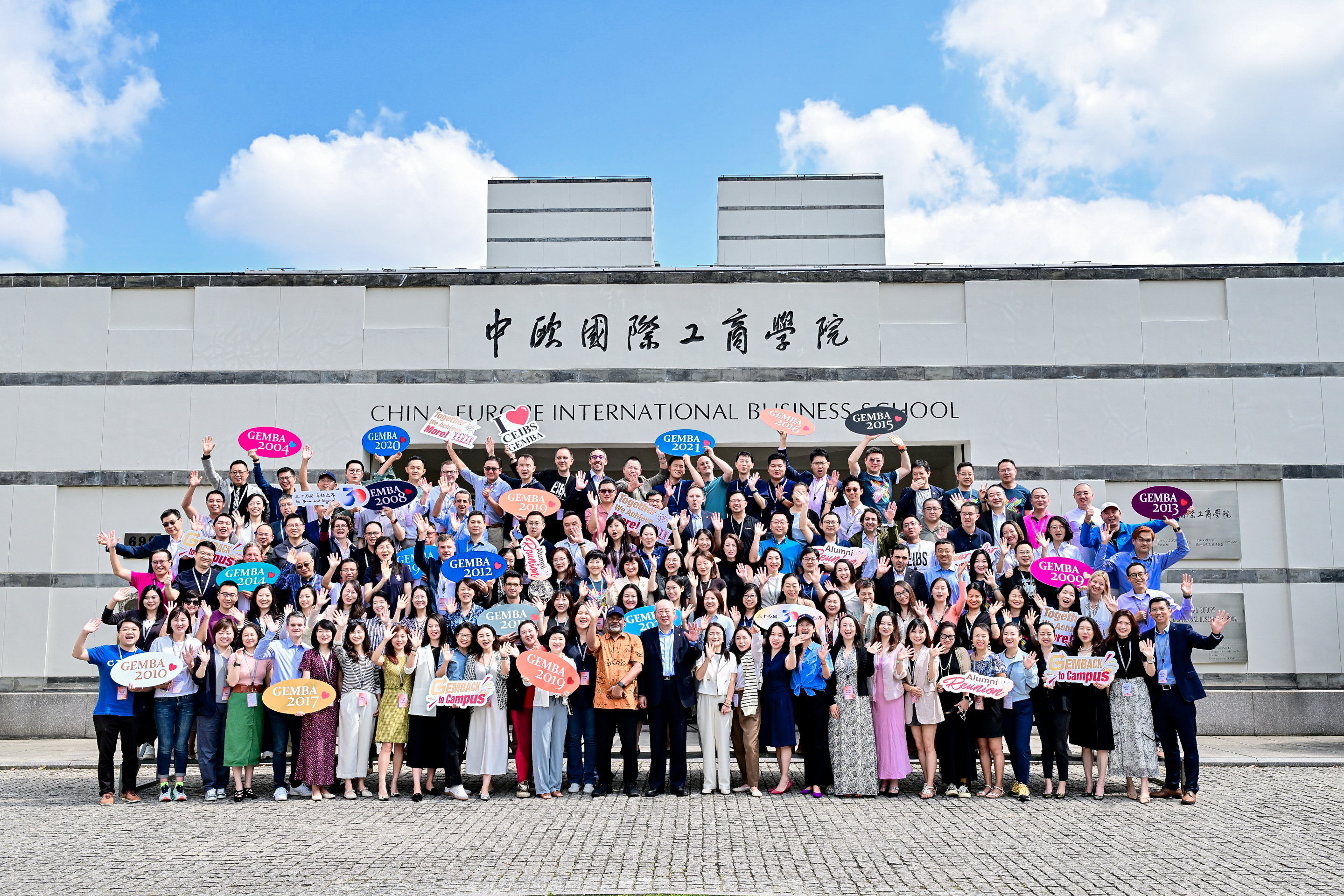
Saturday 28th September 2024: Flying in from all over China and the rest of the world, alumni from cohorts stretching back over 20 years (representatives of Classes 1999 to 2021) gathered at CEIBS Shanghai Campus to reunite, reflect and rekindle friendships new and old.

Welcoming them to the Global EMBA (GEMBA) Annual Reunion was GEMBA Administration Director Isa Luo, serving as the event’s MC, alongside the Programme Director and Associate Dean, Professor Bala Ramasamy, who reminded the assembled alumni of the importance of reconnecting with the school, while forging new connections with each other.

Welcome address by Prof. Bala Ramasamy, Associate Dean and Director of GEMBA Programme, CEIBS
On average GEMBA alumni come back at least four times a year. That’s gratifying for us on the school side to see, because it demonstrates how eager you are to return to CEIBS, to reunite with classmates but also to continue your learning journey with us. Furthermore, we really hope that you take every opportunity to connect with alumni from cohorts other than your own, because we are GEMBA, and together we achieve more.

Welcome address by Prof. Zhang Weijiong, Vice President and Co-Dean of CEIBS
A further welcome address came on behalf of CEIBS’ senior leadership, delivered by Vice President and Co-Dean Professor Zhang Weijiong, one of the longest-serving leaders of the school.
This annual alumni reunion is a special time for me. Whenever I see you gathered together, it reminds me of the foundation of the programme, and it makes me so proud to see how far we have come. Together, through the hard work and dedication of successive professors and literally thousands of students, we have created a programme that is ranked number 2 in the world. Together, we have created a platform dedicated to supporting your lifelong learning journey. Together, we have made a community, a family that is instinctively willing to support everyone within its membership. So, please remember that, and please keep coming back.
A Moment of Recognition
In his welcoming address, Professor Zhang acknowledged that the success of the programme would not be possible without the wholehearted support and active contributions of its current students and growing alumni community.
The next section of the reunion agenda was dedicated to recognising and celebrating those whose personal efforts have elevated the Global EMBA programme.
Such individuals repeatedly contribute their time, expertise and resources. They recommend exceptional candidates to our programme, working hand-in-hand with the GEMBA Office and CEIBS Faculty to arrange visits to their companies. They lead workshops and sharing sessions, spreading their knowledge far beyond their own classroom. Many actively participate in student clubs, Class Committee Teams, charitable events and other fundraising activities. They also support the school’s development and research initiatives through donations or by assisting professors in developing case studies. They help us interview applicants to ensure a high-quality, diverse cohort—and so much more. In short, they lend their strength to the GEMBA programme however and whenever they can.
With more than 1,200 such contributions and over 100 GEMBA Alumni Ambassadors, there was hardly enough time to celebrate everyone’s individual accomplishments. However, the following 10 outstanding alumni were singled out for their respective contributions.

2023 GEMBA Alumni Ambassador Awards
Programme Updates – What’s Next for GEMBA?
Professor Bala then gave a brief overview of how the GEMBA programme is looking ahead, specifically with a view to maintaining what differentiates itself from other business school offerings.
Initially, GEMBA stood out by virtue of offering an English language EMBA in China. However, this cannot be the only thing that differentiates us from other programmes. Our truly invaluable, truly unique offering is giving students a genuinely global mindset. To maintain that offering, we must always be able to consistently provide an educational environment where we think and explore globally in such a natural way that language does not matter, only the mindset.
Highlighting several changes and updates to the programme offering, the professor stated the need for GEMBA to keep pace with an increasingly discerning global education market, resulting in more global modules, more location-based experiential learning, and greater flexibility for students to balance their academic, professional and personal lives.

GEMBA alumni enjoying their reunion at the campus
In 2024, GEMBA students will have global module options in 23 destinations worldwide. This expanding roster of locations will continue to reinforce the global relevance of the programme by giving access to different economies, business cultures and emerging hotspots for the latest developmental trends.
Not forgetting the alumni community side of the programme, the professor highlighted the expanding range of GEMBA student clubs, which now numbers 9, representing 2,000 active members and hosting 40 events in the past year.
These clubs are a lynchpin for the wider GEMBA community, providing platforms for forging deeper friendships and business connections based on mutual interests, as well as relevant knowledge transfer and wider learning opportunities. As such, expanding the range and membership of student clubs is an outcome supported by the GEMBA Office and the school wherever possible.

GEMBA Community at a glance
Partisan Politics and Silver Economics
Alongside the celebratory and administrative elements of the reunion, the agenda also contained two engaging lectures that perfectly encapsulated the overall theme of how a global mindset can better equip a business leader to anticipate and adapt to rapidly changing conditions within their industry and beyond.
The morning lecture – U.S. Partisan Policies on China and Post-Election Scenarios of China-U.S. Relations – was delivered by the Director of International Political Studies at the National Institute for Global Strategy Chinese Academy of Social Sciences (NIGS-CASS), Dr. Zhao Hai. In it, Dr. Zhao outlined the importance of understanding US domestic politics in the context of the upcoming presidential election in November.

Lecture by Dr. Zhao Hai, Director of International Political Studies at the National Institute for Global Strategy Chinese Academy of Social Sciences (NIGS-CASS)
Mapping out the respective election scenarios and resultant policy directions likely to be embraced by a Democrat or Republican administration, Dr. Zhao provided invaluable insights into the potential shape of future US-China relations, and how companies might prepare for the risks and opportunities associated with either outcome.

Lecture by Prof. Lingling Zhang, Associate Professor of Marketing, CEIBS
The afternoon lecture – Turning Silver into Gold: Is the Silver Economy the Next Blue Ocean? – came from CEIBS’ own Associate Professor of Marketing, Lingling Zhang. Given the inevitable aging of China’s population, the economic status, purchasing behaviour, emotional and psychological traits, and cultural habits of China’s elderly people will assume greater influence over the wider economy, not to mention the success or failure of individual companies. In her lecture, Dr Zhang presented a comprehensive overview of how companies can strategically position themselves to capitalise on the expanding silver economy, potentially transforming it into the next blue ocean of opportunity.
Looking back on 30 Years of CEIBS – Looking forward to a further 30
This year’s annual GEMBA Annual Alumni Reunion recognised another milestone, celebrating 30 years since the school’s founding.

With living links to the earliest days of both institutions, all attendees were better able to benchmark how they have progressed and evolved. From a single cohort in a niche programme at a very young school, to a thousands-strong community sharing a globally recognised platform of academic excellence and innovation, none can doubt that GEMBA has gone from strength to strength.
We hope that everyone in attendance thoroughly enjoyed the social, academic, informative and celebratory sides of this very special reunion. As the professors said, there is always a reason to keep coming back, to keep the connections between fellow alumni strong, and keep exploring the future as a community.
Together, we achieve more!
Saturday 28th September 2024: Flying in from all over China and the rest of the world, alumni from cohorts stretching back over 20 years (representatives of Classes 1999 to 2021) gathered at CEIBS Shanghai Campus to reunite, reflect and rekindle friendships new and old.

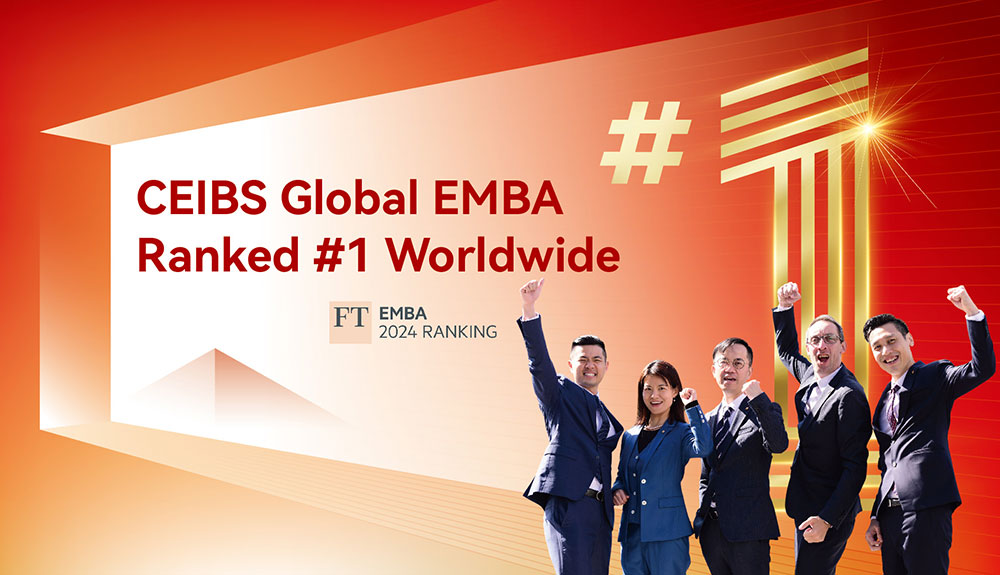
October 14, 2024. Shanghai – The CEIBS Global EMBA (GEMBA) programme has been named #1 in the world in the Financial Times 2024 EMBA Ranking, marking its first ever appearance at the top of the authoritative list. Announced in the same year that CEIBS celebrates the 30th anniversary of its founding, this remarkable achievement marks CEIBS as the first business school on the Chinese mainland to reach the top spot in the FT’s international rankings. It also caps off years of sustained progress. Prior to this year, the CEIBS GEMBA programme spent four consecutive years at #2; before that, it had spent two consecutive years in the top five. This consistent performance and steady improvement highlight not only the exceptional quality of the programme, but also its unwavering commitment to excellence.
This accomplishment comes despite a difficult period for global management education. The GEMBA programme places an international experience and a global mindset at its core, characteristics that were severely hampered during recent years of restricted international travel. Our climb to the top of international rankings despite these challenges highlights the fundamental strengths of the school’s faculty, curricula, and alumni.
Wang Hong
CEIBS President
“In the latest Financial Times global ranking, the CEIBS Global EMBA programme has claimed the top spot! This unprecedented achievement is a significant milestone for CEIBS, serving as a grand gift for the school’s 30th anniversary and a rich source of encouragement to continue building its legacy and striving forward, embodying its motto of "Conscientiousness, Innovation, and Excellence." CEIBS remains focused on nurturing talent to drive economic development, bravely pioneering innovation in Chinese management education, and bridging China and the world. As such, the CEIBS Global EMBA programme has developed numerous global business leaders who possess deep understanding of the Chinese market along with international vision and cross-cultural management skills, who continue to make significant contributions to economic and cultural exchange between China and the world.
As CEIBS celebrates our 30th anniversary, this accolade serves as a call to move forward and a rallying cry for the pursuit of excellence. CEIBS will take this as a new starting point and, guided by our Eight Strategic Priorities, we will continue to develop business leaders versed in "China Depth, Global Breadth” while striving to build CEIBS into the most respected international business school in the world.”
Dominique Turpin
CEIBS President (European)

Frank Bournois
CEIBS Vice President and Dean
Zhang Weijiong
CEIBS Vice President and Co-Dean
The GEMBA alumni community exemplifies CEIBS' mission to bridge China with the world, nurturing a robust network of over 2,300 esteemed leaders and entrepreneurs within CEIBS' wider extensive alumni network of over 30,000 members. Equipped with "China Depth, Global Breadth," these alumni represent nearly 50 countries and regions, driving global economic and commercial exchange and enhancing CEIBS' international footprint. Supported by numerous vibrant student clubs, including the new Going-Global Club aimed at constructing a platform to assist CEIBS students and alumni in globalizing their businesses, the GEMBA alumni network offers more than just short-term educational benefits. It provides a comprehensive platform for lifelong learning. Collectively, these alumni contribute to a vibrant GEMBA community that nurtures tight bonds across industries and cultures.



Bala Ramasamy
CEIBS Associate Dean & Director of GEMBA Programme
This year’s exceptional performance is notably driven by improvement and continued high performance in metrics related to the quality of GEMBA students and the career progress offered to them by the programme. Beyond our exceptional faculty and alumni, this ranking also reflects the fundamentally international and forward-thinking character of our institution. Once again, CEIBS has held the #1 position worldwide in terms of both International Board and Women on Board, highlighting the school's commitment to internationalisation and diversity.
After a difficult period for business schools around the world, the CEIBS Global EMBA’s newly cemented position at the top of international rankings places it in good stead to continue excelling into the future. The programme can once again offer 20 current global module destinations to participants and act as a vital bridge between China and the world, enhancing mutual understanding between business cultures. It is also perfectly placed to offer solutions to the key challenges and trends of today. As many more Chinese companies “go global” and venture into the global market, the CEIBS Global EMBA is positioned to provide international skills and a global mindset. Equally, as multinationals face new challenges in leveraging the Chinese market, CEIBS’ peerless China expertise provides the on-the-ground knowledge that they need to succeed.


The fact that the CEIBS Global EMBA programme is now ranked #1 in the world represents the culmination of years of dedication, excellence, and accomplishment; that it comes in the year of our 30th anniversary makes this achievement all the more momentous. As we look to the future, we are confident that CEIBS’ alumni, faculty and staff will continue to drive the development of the business world and achieve even greater success.

GEMBA Alumni Thoughts


About CEIBS Global EMBA (GEMBA)
CEIBS Global EMBA, is a part-time, English-language Executive MBA programme that balances China Depth and Global Breadth and develops responsible global business leaders. The programme is a transformational self-development journey, allowing each student to step outside their everyday work environment and see business challenges from a whole new perspective. With modules available in more than 20 destinations worldwide, a diverse student body from over 20 countries and regions, and two integrated tracks running between China, Europe and Africa, CEIBS Global EMBA provides unparalleled opportunities for participants to expand their global network, while plugging into China’s largest business school alumni network and to take their career and personal development to the next level. Learn more here.
About CEIBS
China Europe International Business School (CEIBS) was co-founded by the Chinese government and European Union (EU) in 1994 and has campuses in Shanghai, Beijing, Shenzhen, Accra (Ghana), and Zurich (Switzerland).
CEIBS is committed to educating responsible leaders versed in “China Depth, Global Breadth” and serves as an important platform for exchange and co-operation between China, Europe and the world.
The school offers MBA, Finance MBA, EMBA, Global EMBA, Hospitality EMBA, DBA (Switzerland), PhD, and Executive Education programmes. It has placed in the top tier of the Financial Times’ ranking of global MBA programmes for eight consecutive years; the Global EMBA is ranked first in its global ranking of EMBA programmes.
CEIBS has more than 30,000 alumni from over 90 countries and regions around the world and has provided management training for more than 260,000 executives worldwide.

The CEIBS Global EMBA (GEMBA) programme has been named #1 in the world in the Financial Times 2024 EMBA Ranking, marking its first ever appearance at the top of the authoritative list. Announced in the same year that CEIBS celebrates the 30th anniversary of its founding, this remarkable achievement marks CEIBS as the first business school on the Chinese mainland to reach the top spot in the FT’s international rankings. It also caps off years of sustained progress. Prior to this year, the CEIBS GEMBA programme spent four consecutive years at #2; before that, it had spent two consecutive years in the top five. This consistent performance and steady improvement highlight not only the exceptional quality of the programme, but also its unwavering commitment to excellence.
We're thrilled to announce that the CEIBS Global EMBA (GEMBA) programme has been named #1 in the world in the Financial Times 2024 EMBA Ranking, marking its first ever appearance at the top of this authoritative list.
Announced in the same year that CEIBS celebrates the 30th anniversary of its founding, this remarkable achievement marks CEIBS as the first business school on the Chinese mainland to reach the top spot in the FT’s international rankings. It also caps off years of sustained progress. Prior to this year, the CEIBS GEMBA programme spent four consecutive years at #2; before that, it had spent two consecutive years in the top five. This consistent performance and steady improvement highlight not only the exceptional quality of the programme, but also its unwavering commitment to excellence.
Learn more about our Global EMBA programme, now officially crowned the best in the world, here.
We're thrilled to announce that the CEIBS Global EMBA (GEMBA) programme has been named #1 in the world in the Financial Times 2024 EMBA Ranking, marking its first ever appearance at the top of this authoritative list.
Announced in the same year that CEIBS celebrates the 30th anniversary of its founding, this remarkable achievement marks CEIBS as the first business school on the Chinese mainland to reach the top spot in the FT’s international rankings. It also caps off years of sustained progress. Prior to this year, the CEIBS GEMBA programme spent four consecutive years at #2; before that, it had spent two consecutive years in the top five. This consistent performance and steady improvement highlight not only the exceptional quality of the programme, but also its unwavering commitment to excellence.
Learn more about our Global EMBA programme, now officially crowned the best in the world, here.